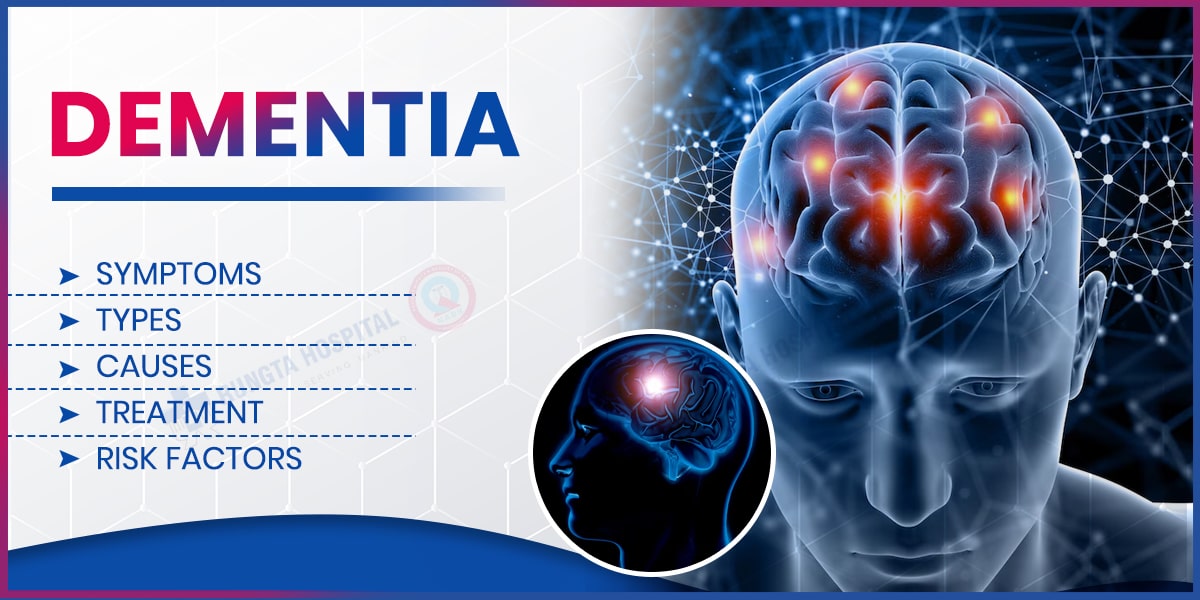

Dementia

Dementia: Symptoms, Types, Causes, Treatment & Risk Factors

Table of Contents

Book An Appointment

What is Dementia?

Dementia is a broad term for problems with thinking and memory that make it hard to do everyday tasks. It is characterized by impairments in memory, thinking, reasoning, and communication, and can also affect mood and behavior. While dementia itself is not a specific disease, it encompasses various conditions, including

Alzheimer’s disease, vascular dementia, and Lewy body dementia, each with distinct causes and symptoms. The progression of dementia varies from person to person, but it typically worsens over time, impacting the individual’s ability to perform everyday tasks and maintain relationships.

Understanding and early diagnosis are crucial for managing symptoms and providing support for both individuals with dementia and their caregivers.

Dementia is a neurological condition, not a primary mental illness, it stems from physical changes in the brain rather than the kind of psychological or emotional origins associated with conditions like depression or anxiety, though it can affect mood and emotional wellbeing as it progresses.

Types of Dementia

Dementia encompasses several types, each with distinct characteristics and underlying causes. Here are some of the most common types:

  1. Alzheimer’s Disease: The most prevalent form, characterized by gradual memory loss, confusion, and changes in behavior. It often begins with mild memory lapses and progresses to severe cognitive impairment.
  2. Vascular Dementia: It occurs when blood flow to the brain is decreased, often due to strokes or other blood vessel problems. Symptoms can include poor judgment, trouble planning, and difficulties with focus.
  3. Lewy Body Dementia: Associated with abnormal protein deposits in the brain called Lewy bodies. Symptoms can include fluctuating cognitive abilities, visual hallucinations, and Parkinsonism.
  4. Frontotemporal Dementia: It involves the deterioration of the frontal and temporal lobes of the brain, resulting in changes in personality, behavior, and language challenges. This type often affects younger people.
  5. Mixed Dementia: It is combination of two or more types of dementia, commonly Alzheimer’s disease and vascular dementia. Symptoms may reflect the characteristics of both types.
  6. Parkinson’s Disease Dementia: This occurs in individuals with Parkinson’s disease, typically developing later in the disease’s progression, and includes memory issues and difficulties with concentration.
  7. Huntington’s Disease: A genetic disorder that causes the progressive breakdown of nerve cells in the brain, leading to cognitive decline, movement disorders, and emotional changes.

Also useful:- Consult our Neurology department for a proper evaluation if you’re noticing memory or cognitive changes in yourself or a loved one.

Stages of Dementia

While dementia types describe which condition someone has, stages describe how far it has progressed. Most forms of dementia are generally divided into 3 main stages:

Early Stage (Mild): Memory lapses are noticeable but often mistaken for normal aging, forgetting recent conversations, misplacing items, or struggling to find the right word. The person can usually still live independently, though they may need occasional reminders or support with complex tasks like managing finances.

Middle Stage (Moderate): Memory and thinking difficulties become more pronounced and harder to overlook. Daily tasks like dressing, cooking, or managing medications become more difficult without help. Confusion about time or place, mood changes, and wandering can also appear during this stage, it’s typically the longest stage and often requires increasing caregiver support.

Late Stage (Severe): The person usually requires full-time care. Communication becomes very limited, physical abilities decline significantly, and the person may not recognize close family members. Care at this stage focuses heavily on comfort, dignity, and quality of life.

Not everyone progresses through these stages at the same pace, the rate of decline depends on the type of dementia, overall health, and other individual factors. A neurologist can help identify which stage a person is in and adjust care and treatment plans accordingly.

What are the symptoms of dementia?

Symptoms of dementia can vary but generally include:

  • Memory Loss: Trouble recalling recent events, names, or conversations.
  • Cognitive Decline: Difficulties with thinking, reasoning, and problem-solving.
  • Language Issues: Challenges in finding the right words or keeping up with conversations.
  • Disorientation: Confusion regarding time, place, or people.
  • Mood and Behavior Changes: Increased feelings of anxiety, depression, or irritability.
  • Difficulty with Daily Tasks: Challenges in planning, organizing, or completing familiar activities.
  • Poor Judgment: Making unusual decisions or exhibiting impaired judgment.

Early warning signs worth paying particular attention to include repeating questions or stories within a short time, misplacing items in unusual places (like keys in the fridge), getting lost in familiar places, and personality or mood shifts that feel out of character. These early signs are often subtle and easy to dismiss as stress or normal aging, if several of them appear together and persist, it’s worth having them evaluated rather than waiting.

What are the causes of dementia?

Dementia can be caused by a variety of factors, often related to changes in the brain. Common causes include:

  • Alzheimer’s Disease: The most common cause, marked by the accumulation of amyloid plaques and tau tangles in the brain.
  • Vascular Issues: Conditions such as stroke or high blood pressure can decrease blood flow to the brain, resulting in vascular dementia.
  • Lewy Bodies: Abnormal protein deposits in the brain associated with Lewy body dementia, affecting cognitive and motor functions.
  • Frontotemporal Degeneration: Involves the degeneration of the frontal and temporal lobes, often linked to genetic mutations.
  • Parkinson’s Disease: Can lead to dementia as it progresses, affecting cognitive function over time.
  • Huntington’s Disease: A genetic disorder that causes the progressive breakdown of nerve cells, leading to cognitive decline.
  • Other Factors: Certain conditions like alcohol abuse, nutritional deficiencies (e.g., vitamin B12), and infections can also contribute to cognitive decline.

How is Dementia Diagnosed?

Diagnosing dementia involves a comprehensive evaluation that typically includes the following steps:

  1. Medical History: A doctor will gather information about the patient’s medical history, family history of dementia, and any cognitive or behavioral changes.
  2. Physical Examination: A thorough physical exam helps rule out other conditions that could cause similar symptoms.
  3. Neurological Assessment: This includes tests to evaluate memory, problem-solving skills, attention, language, and other cognitive abilities.
  4. Cognitive Tests: Standardized tests, such as the Mini-Mental State Examination (MMSE) or the Montreal Cognitive Assessment (MoCA), may be used to assess cognitive function.
  5. Imaging Studies: Brain scans, such as MRI or CT scans, can help identify structural changes, tumors, or strokes.
  6. Laboratory Tests: Blood tests may be conducted to check for vitamin deficiencies, thyroid problems, or other medical conditions that could affect cognition.
  7. Observation of Symptoms: Family members or caregivers may provide insights into the patient’s behavior and daily functioning, which can aid in diagnosis.


You can read also:- Consult our Neurologist for cognitive assessments and dementia diagnosis support.

Treatment of Dementia

Treating dementia focuses on managing symptoms, improving quality of life, and providing support for both individuals and caregivers. While there is currently no cure, several approaches can help:

1. Medications:

  • Cholinesterase Inhibitors (e.g., Donepezil, Rivastigmine, Galantamine) can help manage symptoms of Alzheimer’s and some other types of dementia by increasing levels of neurotransmitters.
  • Memantine is often prescribed for moderate to severe Alzheimer’s disease, helping to regulate glutamate to improve memory and learning.
  •  Antidepressants or anti-anxiety medications may be used to manage mood changes or anxiety.

2. Therapeutic Interventions:

  • Cognitive stimulation therapy can help improve cognitive function and overall well-being.
  •  Occupational therapy assists individuals in maintaining independence through adapted daily activities.

3. Lifestyle Changes:

  •  Encouraging physical activity, a balanced diet, and social engagement can support cognitive health and improve mood.
  • Mental exercises, like puzzles or reading, may help stimulate the brain.

4. Supportive Care:

  • Education and support for caregivers are crucial, as caregiving can be challenging and emotionally taxing.
  • Support groups can provide a space for sharing experiences and coping strategies.

5. Palliative Care: As dementia progresses, palliative care focuses on comfort, dignity, and quality of life, addressing both physical and emotional needs.

Risk Factors of Dementia

Risk factors for dementia include:

  • Age: The risk increases significantly with age, especially after 65.
  • Family History: A genetic predisposition or a family history of dementia can elevate risk.
  • Genetic Factors: Certain genes, like APOE ε4, are associated with a higher likelihood of Alzheimer’s disease.
  • Cardiovascular Health: Conditions like high blood pressure, heart disease, and diabetes can increase risk.
  • Lifestyle Factors: Poor diet, lack of exercise, smoking, and excessive alcohol consumption contribute to risk.
  • Education and Cognitive Engagement: Lower levels of education and reduced mental stimulation may be linked to a higher risk.
  • Traumatic Brain Injury: Previous head injuries can increase the likelihood of developing dementia later in life.

How to Prevent Dementia

While not all dementia is preventable, especially forms with a strong genetic component, research points to several habits that can meaningfully lower your risk or delay onset:

  • Manage cardiovascular health. Controlling blood pressure, cholesterol, and blood sugar protects blood flow to the brain, directly reducing the risk of vascular dementia.
  • Stay physically active. Regular exercise supports healthy blood flow to the brain and is one of the most consistently supported protective factors.
  • Keep your mind engaged. Reading, puzzles, learning new skills, and other mentally stimulating activities help build cognitive reserve.
  • Stay socially connected. Regular social interaction is linked to slower cognitive decline in several studies.
  • Prioritize sleep. Poor sleep, particularly untreated sleep apnea, has been linked to a higher risk of cognitive decline over time.
  • Limit alcohol and avoid smoking. Both are associated with increased dementia risk.
  • Protect your head. Wearing seatbelts and helmets to reduce traumatic brain injury risk can lower long-term dementia risk as well.
  • Treat hearing loss. Untreated hearing loss has been linked to a higher risk of cognitive decline, likely due to reduced social engagement and cognitive strain.

None of these guarantee prevention, but together they represent the most evidence-backed way to reduce risk. If dementia runs in your family, discussing your personal risk factors with a neurologist can help you build a more targeted prevention plan.

Conclusion

In conclusion, Rungta Hospital is committed to providing comprehensive care for individuals with dementia, focusing on early diagnosis, personalized treatment plans, and compassionate support.

As dementia remains a complex and challenging condition, the hospital’s multidisciplinary team of specialists ensures that patients and their families receive holistic care tailored to improve quality of life. By integrating advanced medical interventions with emotional and psychological support, Rungta Hospital strives to be a beacon of hope for those affected by dementia, fostering an environment of understanding, dignity, and continuous care.

Frequently Asked Questions

Is dementia hereditary?
Having a family history of dementia can increase your risk, and certain genes (like APOE ε4) are linked to a higher likelihood of Alzheimer’s disease specifically. However, having a family member with dementia doesn’t mean you’ll definitely develop it,  genetics is one risk factor among several, not a guarantee.

Is dementia a mental illness?
No. Dementia is a neurological condition caused by physical changes in the brain, not a primary mental illness like depression or schizophrenia. That said, dementia can affect mood, behavior, and emotional wellbeing as it progresses, and mental health support is often an important part of overall care.

What is usually the first noticeable sign of dementia?
Short-term memory lapses are typically the earliest and most noticeable sign, things like repeating questions, forgetting recent conversations, or misplacing items more than usual. Not every memory lapse means dementia, but a persistent pattern is worth having evaluated.

How quickly does dementia progress?
This varies significantly by person and by type of dementia. Some forms progress over many years, while others, like some cases of vascular dementia, can progress more suddenly after a stroke. A neurologist can give a more specific outlook based on an individual’s diagnosis and health.

Can lifestyle changes really reduce dementia risk?
Yes, to a meaningful degree. While lifestyle changes can’t eliminate risk entirely (especially where genetics play a strong role), managing cardiovascular health, staying physically and mentally active, and maintaining social connections are consistently linked to lower risk and slower progression in research.


WhatsApp Call

Book an Appointment