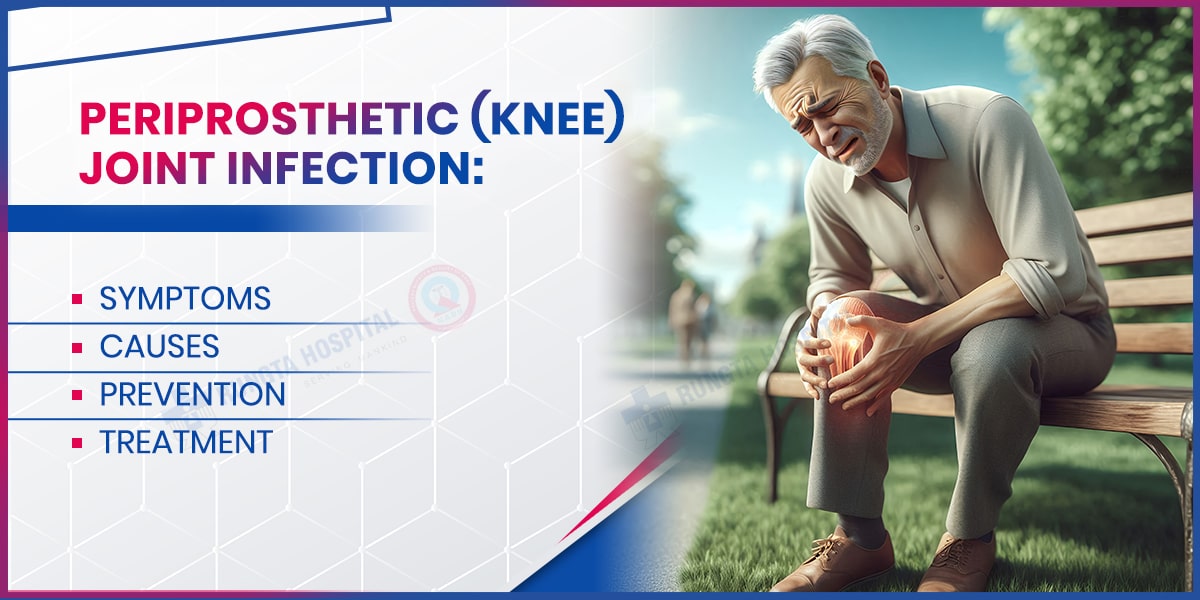
Periprosthetic knee joint infection (PJI) is a challenging complication that can occur after knee replacement surgery. This infection affects the area around the knee implant, causing pain, inflammation, and sometimes more severe systemic symptoms. Early detection and treatment are crucial for preserving joint function and patient health.
In this overview, we will explore the symptoms of PJI, such as persistent pain, swelling, and drainage, as well as common causes, including bacterial contamination during surgery and weakened immune responses. We’ll also cover preventive measures, like pre-surgical sterilization protocols and lifestyle factors, alongside the latest treatment options, including antibiotics, surgical interventions, and innovative techniques. Together, these topics provide a comprehensive look into understanding, managing, and preventing periprosthetic knee joint infections.
You Can Read also:- Osteotomy (Bone Cutting): Types, Procedure, Treatment & Recovery
Symptoms of infection following knee replacement surgery, or periprosthetic knee joint infection (PJI), can vary but commonly include:
Infections following knee replacement surgery, or periprosthetic joint infections (PJI), can result from several factors. Common causes include:
Several risk factors can increase the likelihood of infection following knee replacement surgery, often involving patient health, lifestyle, and surgical factors. These include:
Treating a knee joint or periprosthetic joint infection (PJI) requires a combination of antimicrobial therapy and, often, surgical intervention. The treatment approach depends on the infection’s severity, timing, and patient health. Key treatment options include:
Preventing knee joint infections, particularly periprosthetic joint infections (PJI) after knee replacement surgery, involves a series of preoperative, intraoperative, and postoperative strategies:
Can a knee replacement get infected years after surgery?
Yes. While most infections occur within the first few months after surgery, periprosthetic knee joint infection can develop months or even years later, usually when bacteria from another part of the body (such as a dental procedure, skin infection, or urinary tract infection) travel through the bloodstream and reach the implant. This is known as a late-onset or hematogenous infection.
What are the first signs of infection after knee replacement?
Early warning signs include persistent or worsening pain, swelling and redness around the joint, warmth to the touch, fluid or pus draining from the incision, fever or chills, and stiffness that doesn’t improve with normal recovery. If any of these appear, contact your orthopedic surgeon promptly rather than waiting for a scheduled follow-up.
How is a knee joint infection treated?
Treatment depends on how early the infection is caught. Early infections may be managed with surgical debridement (cleaning out infected tissue) while keeping the implant in place, combined with antibiotics. Infections caught later, once bacteria have formed a biofilm on the implant, usually require revision surgery, either a one-stage or two-stage procedure to remove and replace the infected components.
How common is infection after knee replacement?
Periprosthetic joint infection is uncommon, affecting roughly 0.5–2% of knee replacement patients. The risk is higher in people with diabetes, obesity, rheumatoid arthritis, or a weakened immune system, and in patients undergoing revision or prolonged surgeries.
Is periprosthetic joint infection the same as bone TB?
No. Periprosthetic joint infection is typically caused by common bacteria (such as Staphylococcus) contaminating the area around a knee implant, while bone tuberculosis (haddi ki TB) is a distinct condition caused by the TB bacterium and can affect natural bone or joints without any implant involved. The symptoms can overlap, so proper diagnosis with imaging and lab tests is essential.
In conclusion, periprosthetic knee joint infections are serious complications following knee replacement surgery that demand prompt diagnosis and a strategic treatment approach. Early detection of symptoms, along with appropriate treatment, can prevent further complications and preserve joint function. Preventive measures before, during, and after surgery are essential to minimize infection risks and improve patient outcomes.
Typically, managing these infections falls under the Orthopedic Department, with specialized teams trained to treat and prevent complex joint infections. For comprehensive care and expertise, Rungta Hospital stands out as an excellent facility for treating knee replacement infections, offering advanced diagnostics, skilled orthopedic care, and cutting-edge treatment protocols to support recovery and joint health.