![29 NICU Care for Newborns [rungta].jpg.jpg](https://rungtahospital.com/wp-content/uploads/2026/10/29-NICU-Care-for-Newborns-rungta.jpg.jpg.jpeg "Heart Attack Warning Signs: Causes, Risk Factors & Prevention Tips 2")
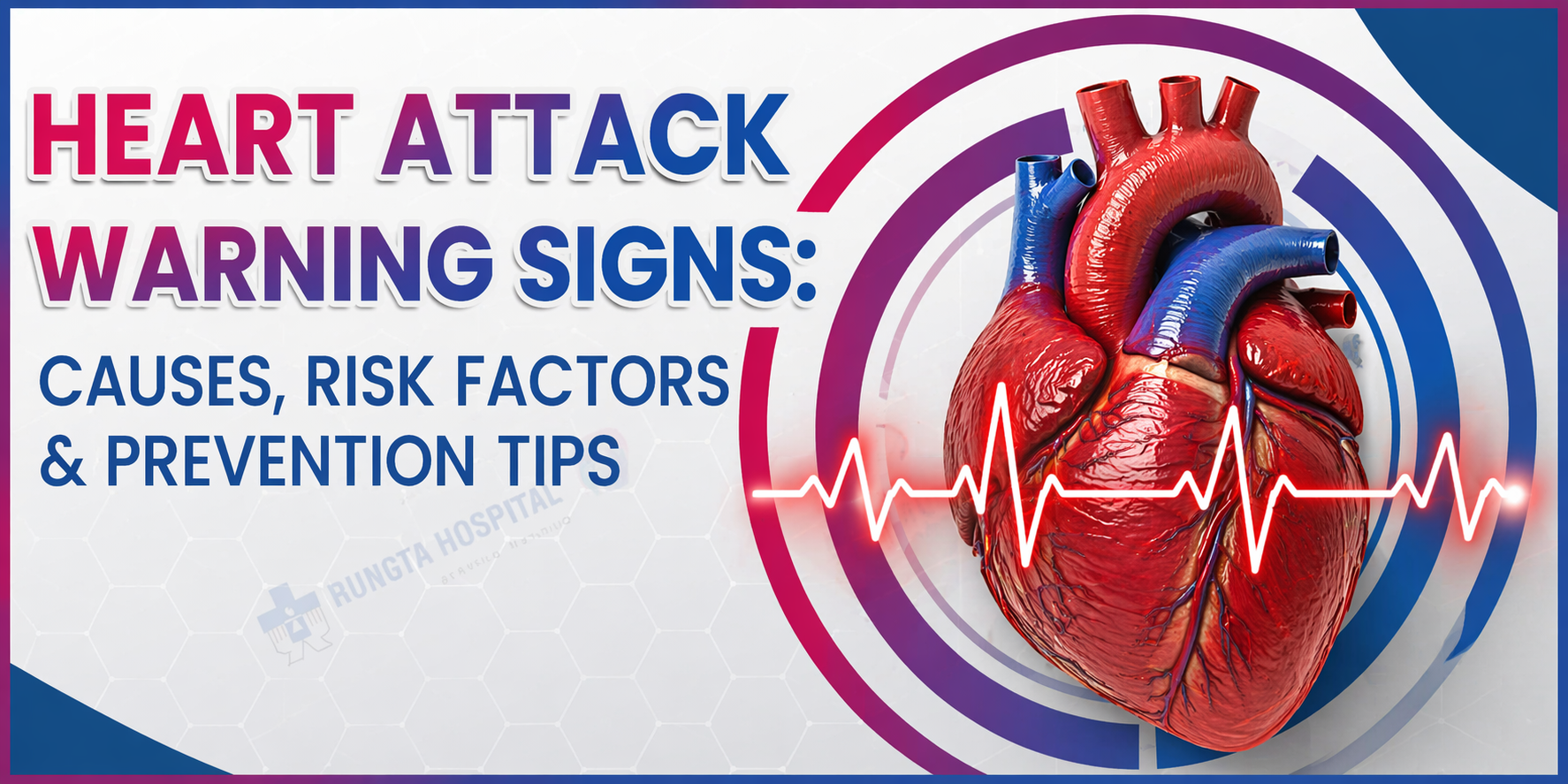
A heart attack or myocardial infarction is a sudden stop in the supply of oxygen rich blood to a part of the heart muscle. Lack of oxygen causes the heart muscle to die. Heart disease has emerged as one of the major causes of death in India and the condition tends to strike at a very young age as compared to other western nations.
The diagnosis at an early age is not only a medical suggestion, it is a life-saving measure. Every minute matters when the heart muscle is starved of the blood. It is important to know the heart attack warning signs and to take prompt action that can save a full recovery and damage the heart that may never be recovered.
Although most people would assume a heart attack involves a sudden collapse and is hollywood like, most heart attacks begin gradually and can lead to mild pain or discomfort.
Heart attacks are more likely to affect women differently as compared to men. Although chest pain remains prevalent, women tend to have atypical symptoms which are often overlooked or diagnosed as something else.
The body frequently sends signals days or even weeks prior to a big event happening. Early signs of heart attack can prevent medical attention.
If you or someone around you experiences severe chest pain, extreme shortness of breath, or fainting, call emergency services immediately.
What to do during a heart attack:
The primary cause of a heart attack is Coronary Artery Disease (CAD).
In India, lifestyle factors play a huge role in heart health. Major risk factors include:
Prevention is always better than cure. Small changes can lead to a much stronger heart:
When you arrive at a hospital with heart symptoms, doctors use several tools:
India provides high quality cardiac services. Treatments may involve:
In case you need some expert advice or require a special heart check-up, it is prudent to have the best cardiologist in Jaipur so that your heart is in the safest of hands.
Can heart attack symptoms come and go? Yes. In some cases the symptoms may sometimes be intermittent and only take a few minutes before they vanish before reoccurring a few hours later. This is a common symptom of unstable angina, and is an emergency.
How long does a heart attack last? The period the blood is blocked is the “attack” itself. The symptoms can last for minutes to hours. Nevertheless, the heart muscle is permanently damaged unless the blood flow is restored in 90 minutes.
Can young people get heart attacks? Yes. With sedentary lifestyle, stress and unhealthy diets, people are experiencing increased heart attacks in their 20s and 30s in India.
The best way you can save yourself and your family is to understand the heart attack warning signs. Since you can notice the early signs of heart attack or lead a healthy lifestyle, each decision you make influences your heart health.
Pay attention to such slight manifestations as uncharacteristic fatigue or slight pressure. The sooner the better. Book a heart check today and have your heart pumping!