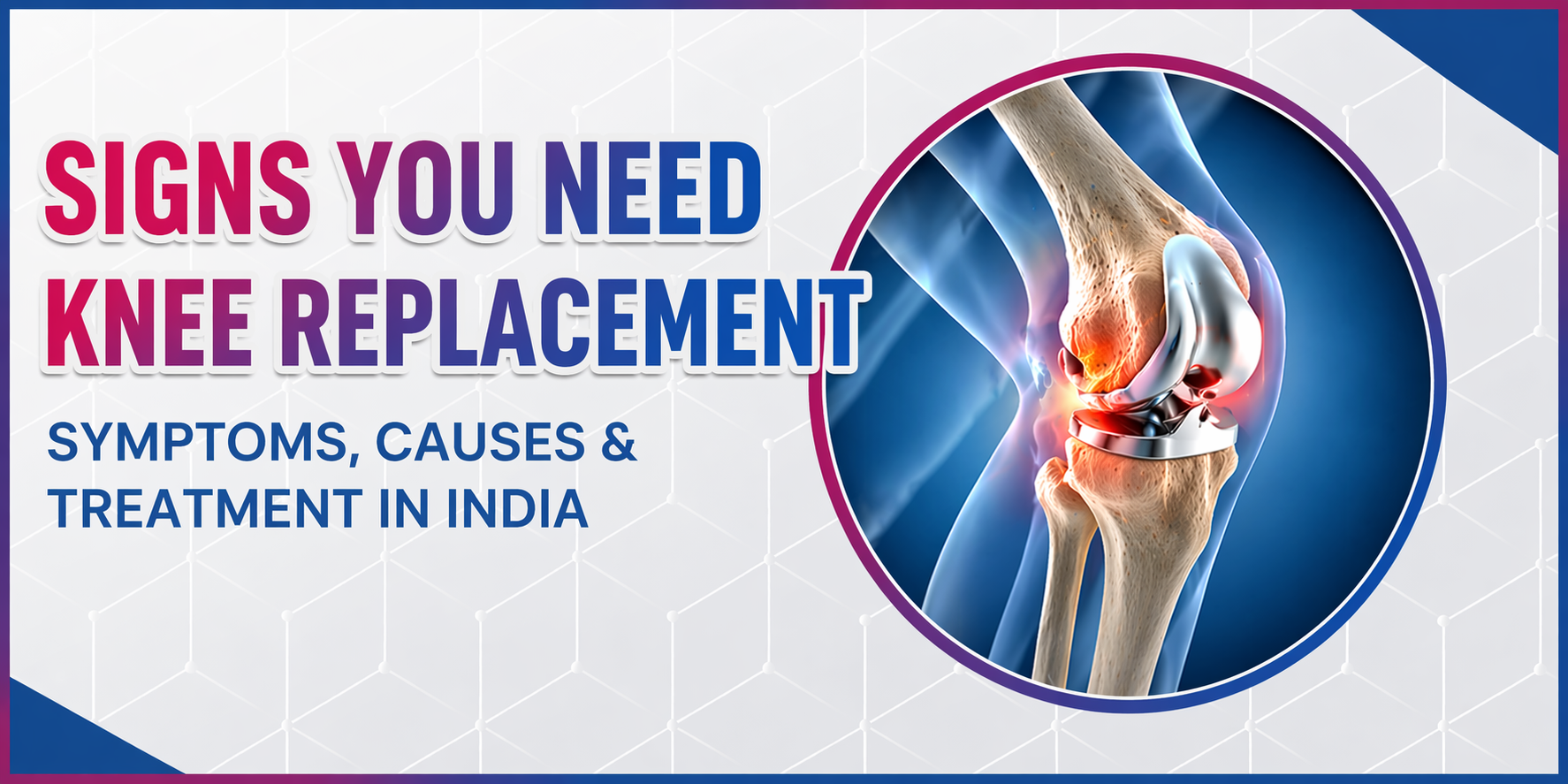
Signs you need knee replacement

Signs You Need Knee Replacement: Symptoms, Causes & Treatment in India

Book An Appointment

Table of Contents

Knee pain is not simply a physical pain, but it is something that puts a wall between you and the life that you love. Be it playing with your grandkids, taking strolls in the morning or even just going around the house, chronic knee pain can severely decrease your level of independence. Although most individuals can cope with small adaptations, at some stage it cannot be pushed any longer.

Treatment is crucial. When one delays the required intervention, the compensatory injury(s) in the hips or back usually occur and the muscle may also waste away and recovery may become very difficult later. The first step towards regaining your mobility is to understand the signs you need knee replacement.

What Is Knee Replacement Surgery?

Knee replacement, also known as arthroplasty, is a surgical operation in which the damaged bone and cartilage in the knee joint are substituted with an artificial joint (prosthesis) consisting of metal alloys, high grade plastics and polymers.

The procedure is usually suggested in patients with serious damage to the joints that disrupt day-to-day life and have not responded to other milder interventions.

Common Causes of Knee Damage

Most of your body weight is borne by the knee, and it is susceptible to damage with time:

  • Osteoarthritis:
    This is the most prevalent cause whereby cushioning cartilage slowly degenerates with resultant pain and stiffness.
  • Rheumatoid Arthritis:
    A disease in which the immune system of the body assaults the joints thereby causing swelling and pain.
  • Injury or Trauma:
    Old injuries like ligament tears or fractures can cause long-term knee problems if not properly treated.
  • Age-related Changes:
    The joints become less flexible and strong as we grow older and this condition predisposes us to knee pain.
  • Diabetes and Blood Sugar Levels:
    Inflammation and poor circulation can cause more problems with the joints in people with diabetes. Uncontrolled blood sugar may also slow down the healing process and aggravate joint problems. To have a better understanding of how to deal with this, you can refer to this blood sugar level chart and understand how to be healthy in that area.

Top Signs You May Need Knee Replacement

1. Persistent Knee Pain

If you experience knee replacement symptoms like throbbing pain even when you are sitting or lying down, it’s a major red flag. Pain that interrupts your sleep is a clear indicator that the joint damage is significant.

2. Difficulty Walking or Climbing Stairs

Do you find yourself dreading the stairs or needing to stop every few steps? When reduced mobility dictates your schedule, it’s a sign that the joint is no longer functional.

3. Swelling and Stiffness

Chronic inflammation that doesn’t go away with rest or ice suggests that the internal structures of the knee are severely compromised.

4. Limited Range of Motion

If you have trouble fully straightening your leg or bending your knee to sit comfortably, your joint may be “locking” due to bone spurs or cartilage loss.

5. Knee Deformity

A “bowing” in or out of the knee (knock-knees or bow-legs) often occurs as the joint wears down unevenly. This misalignment can cause rapid deterioration of the remaining healthy tissue.

6. No Relief from Medications or Therapy

If injections, anti-inflammatory drugs, and exercises no longer provide relief, it is usually time to discuss when to get knee replacement with an expert at a reputed knee replacement hospital Jaipur.

When Should You See a Doctor?

You should consult an orthopedic specialist if you experience:

  • Pain that limits your social life or work.
  • A grating sensation (crepitus) in the joint.
  • Knee instability where the leg feels like it might “give way.”

Diagnosis and Evaluation

To determine if you are a candidate for surgery, doctors typically perform:

  • Physical Exam: Checking for stability, strength, and range of motion.
  • X-rays or MRI: To visualize the extent of bone damage and cartilage loss.
  • Medical History: Reviewing previous injuries and overall health.

Alternatives to Knee Replacement

Before jumping to surgery, doctors often suggest:

  • Physiotherapy: Strengthening the muscles around the knee.
  • Medications: Non-steroidal anti-inflammatory drugs (NSAIDs).
  • Lifestyle Changes: Weight loss to reduce pressure on the joint.

Benefits of Knee Replacement Surgery

The main aim of this process is to restore to you the freedom that chronic pain has deprived you of. It is a second lease on life to many. The following is a more detailed examination of the life-changing benefits:

  • Significant Pain Relief: The most obvious and immediate advantage is the loss of that bone-on-bone stabbing sensation. Although the surgery itself may have a certain amount of soreness, the chronic, throbbing arthritic pain which made you miserable at night is usually gone completely.
  • Restored Mobility and Independence: Simple activities that previously seemed like a mountain (i.e. getting out of a low car, gardening or walking around a shopping mall) now become simple again, post-surgery. You will also not need to be assisted by family members or canes to get around your own house.
  • Improved Physical Health: When your knees don’t hurt, you move more. This heightened exercise is good to your heart, is good at managing weight, and regulates blood sugar. It interrupts the vicious circle of inactivity that causes weight gain, which in turn only exacerbates the pain in the knees in the first place.
  • Correction of Deformities: Your legs can even be straightened with surgery. In case your legs are bowling out or leaning in due to years of wear and tear the surgeon can reposition the limb in the process, which, in addition, reduces the strain on your hips and ankles.
  • Better Mental Well-being: Being in permanent pain is exhausting and may result in frustration/isolation. Getting back to being able to attend social events, go on vacation, and play with your grandchildren is an enormous mood- and mind-boost.
  • High Success Rate and Longevity: The artificial joints of today are extremely robust. A new knee has a very long-term solution to a challenging problem with proper care and exercise lasting 15 to 20 years or longer.


When you decide to have a knee replacement surgery at the right time and address a reputed knee replacement hospital Jaipur, you are not merely repairing a joint you are spending years of active and happy life.

Risks and Considerations

Any major surgery like this involves some risk of infection, blood clots or wear of the implant after 15-20 years. The process of recovery takes time, with the majority of patients getting back to light exercises in 6 to 12 weeks.

Recovery and Rehabilitation

Surgery is part of the battle, the second part is won in the recovery. Specific rehabilitation is needed to make the new joint work properly. Professional physiotherapy after knee surgery Jaipur will assist you to become stronger and make your implant last.

Conclusion

Knee replacement is a life changing surgery to the individuals with debilitating pain in their joints. You can save years of unwarranted suffering by knowing the signs you need knee replacement. When your golden years are being stained by the chronic pain, then do not think twice to consult a professional medical care. This procedure is safer and more effective than ever due to modern orthopedic developments in India.


WhatsApp Call