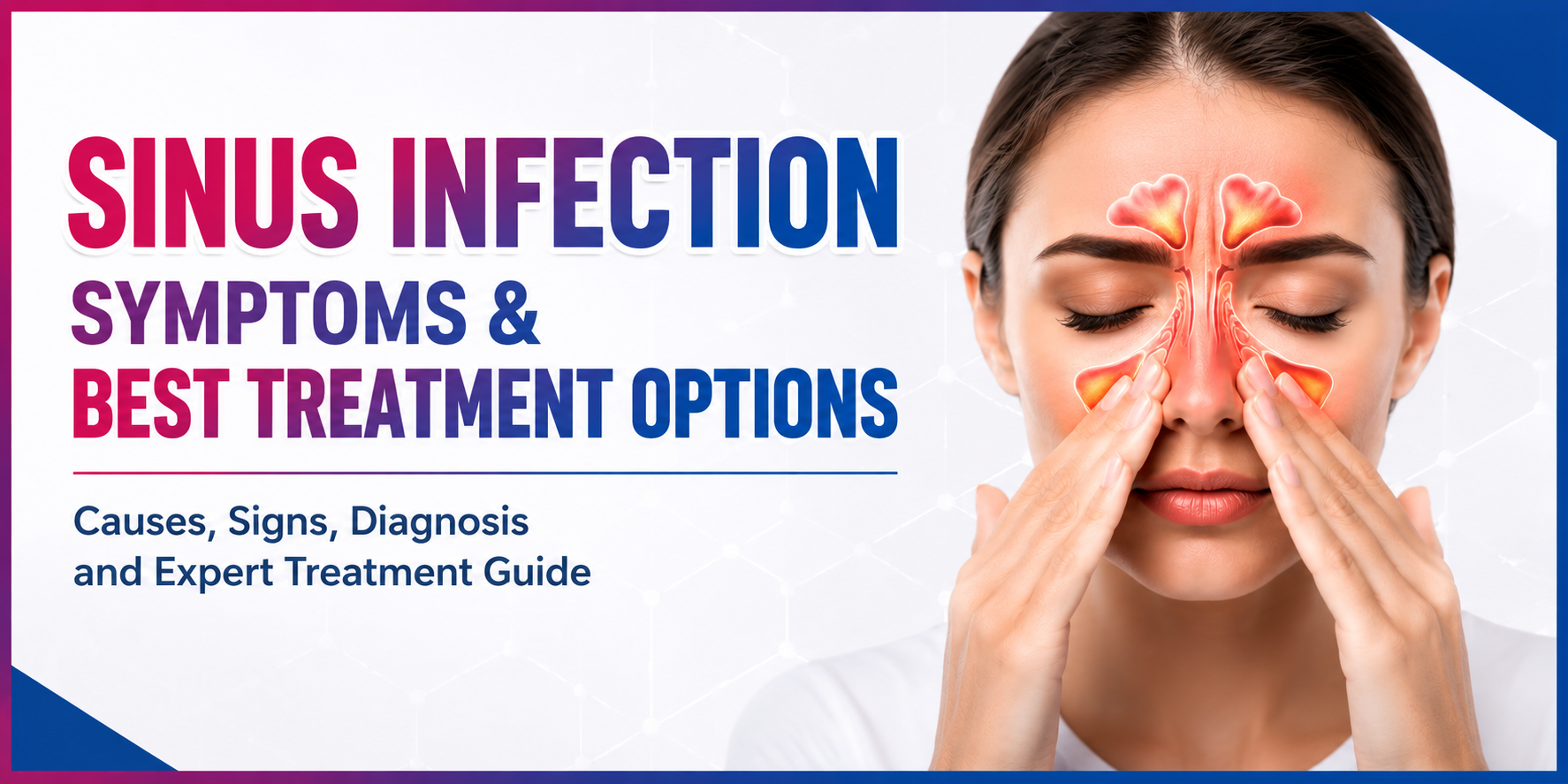

Sinus infection symptoms and treatment guide

Sinus Infection Symptoms and Best Treatment Options

Book An Appointment

Table of Contents

You’re probably familiar with that feeling when they’re just really heavy and hit behind your eyes, and you can’t get your nose to clear. An uncomfortable condition is called a sinus infection or sinusitis. It happens if the inner lining of the cavities of air in the face become swollen and irritated.

In the recent years, sinus related issues have been on the rise in India. Now, between the worsening air pollution, sudden weather changes and seasonal allergies, what was once an easy cold, for many, has become a painful ongoing struggle. If left untreated, sinus issues can bring destruction to your sleep, rob you of your energy and make your workday very difficult.

What are the common sinus infection symptoms?

Typical sinus infection symptoms involve difficulty breathing, headache, nasal congestion, facial pain and a blocked nose.

If these symptoms are identified early, it may be the first step in the right direction toward the right sinus treatment and a healthy lifestyle.

What Is a Sinus Infection?

To understand a sinus infection, it helps to know what sinuses actually are. Sinuses are hollow, air-filled spaces inside the bones of your face specifically around your forehead, nose, and cheeks. Your sinuses normally produce a thin layer of mucus. This mucus drains naturally through your nose, acting like a built-in filter to trap dust and keep the air you breathe moist.

A sinus infection happens when these drainage pathways get blocked. When the lining of your nasal passages swells up due to a cold or allergies, mucus gets trapped inside the cavities. This dark, wet environment becomes the perfect breeding ground for germs (like viruses or bacteria) to grow, leading to an infection.

Acute vs. Chronic Sinusitis

  • Acute Sinusitis: This is a short-term infection. It usually starts as a regular cold and clears up on its own or with basic medicine within 2 to 4 weeks.
  • Chronic Sinusitis: This is a long-term problem. If your sinus symptoms keep lingering for more than 12 weeks despite trying different treatments, it is considered chronic and requires a visit to a specialist.

How Urban Pollution and Weather Drive Sinusitis in India

Living in major Indian cities introduces unique environmental challenges that directly impact your respiratory health. With skyrocketing Air Quality Index (AQI) levels, heavy dust exposure from construction, and intense seasonal pollen variations, our nasal passages are constantly under siege. When you breathe in these fine particulate matters and urban pollutants, they cause immediate inflammation and swelling in your nasal tissues. This seasonal shift especially during the smog-heavy northern winters or the humid monsoon months essentially traps mucus inside the cavities, making urban residents highly susceptible to chronic, recurring sinus infections.

Common Sinus Infection Symptoms

A sinus infection can feel like a heavy weight sitting right on your face. While everyone experiences it a bit differently, there are several key signs to watch out for.

The most common symptoms of a sinus infection include:

  • A deeply stuffed or blocked nose
  • Intense pressure or pain around your eyes, cheeks, and forehead
  • A throbbing headache that gets worse when you lean forward
  • Thick green or yellow mucus draining from your nose
  • A constant dripping feeling at the back of your throat (postnasal drip)
  • Difficulty breathing comfortably through your nose
  • A poor or temporary loss of your sense of smell and taste
  • Feeling unusually tired or running a mild fever

Blocked or Stuffy Nose

The swelling inside your nose narrows your breathing pathways. This traps air and mucus, forcing you to breathe through your mouth, which can leave your throat feeling dry and scratchy.

Facial Pain and Pressure

You might feel a dull, heavy ache right over your forehead, across your cheeks, or even in your upper teeth. The pain often gets sharper if you bend down to pick something up or when you lie flat in bed.

Headache Around Eyes and Forehead

Sinus headaches are different from regular stress headaches. They feel like localized, intense pressure trapped right behind your eyes or across your brow line.

Thick Nasal Discharge

Unlike the clear, watery nose you get with a minor allergy, a sinus infection usually causes thick, cloudy, yellow, or greenish mucus.

Difficulty Breathing

When your nasal passage is completely blocked and inflamed, taking a full breath feels nearly impossible, which often leads to heavy snoring at night.

Reduced Sense of Smell

Because air cannot reach the deep sensory areas high up inside your nose, your ability to smell your surroundings and fully taste your food drops significantly.

Fever and Fatigue

Because your immune system is working overtime to fight off the infection, it is common to feel physically exhausted, sometimes accompanied by a low-grade fever.

Sinus Symptoms and Causes

Sinusitis rarely happens out of nowhere. Something usually triggers the initial swelling that blocks your nasal passages.

Fever and Fatigue

  • Viruses and Bacteria: Most infections start from a simple viral cold. If the mucus stays trapped for too long, bacteria can take over and worsen the infection.
  • Allergies: Being sensitive to dust mites, pollen, or pet fur can cause immediate swelling in your nose.
  • Air Pollution and Dust: High pollution levels and smoke irritate the respiratory tract, keeping your sinuses constantly inflamed.
  • Physical Blockages: Structural issues like a deviated septum (a crooked wall dividing your nostrils) or nasal polyps (soft, non-cancerous growths) can physically block drainage.
  • Smoking: Tobacco smoke damages the tiny, hair-like structures inside your nose that are responsible for sweeping mucus out.

Why does sinus infection happen repeatedly?

Repeated sinus infections happen when the root cause like an untreated allergy, constant exposure to heavy air pollution, or a physical blockage like a deviated septum is never fixed, keeping the nasal lining permanently inflamed.

Difference Between Sinus Infection and Common Cold

Because they share similar early signs, it is easy to mistake a sinus infection for a lingering cold. However, knowing the difference helps you choose the right care.
Feature / SymptomCommon ColdSinus Infection (Sinusitis)
Facial Pain & PressureRare or very mildSevere, localized around eyes/forehead
Nasal DischargeThin, watery, and clearThick, cloudy, yellow or green
How Long It LastsClears up in 5 to 7 daysDrags on for more than 10 to 14 days
HeadacheMild or full-headedIntense, throbbing behind the eyes
FeverVery rare in adultsCommon low-grade fever

How can you tell the difference at home?

If your cold symptoms last more than 10 days without showing any signs of getting better, it has likely turned into a sinus infection.

Best Sinus Treatment Options

The best way to treat a sinus problem depends entirely on how long you’ve had it and how bad it feels. Relief options range from simple home care to professional medical treatments.

Home Remedies for Mild Sinus Problems

If your symptoms are mild or just starting, you can easily manage them at home to thin out the mucus and open your airways:

  • Steam Inhalation: Breathing in steam from a bowl of hot water 2–3 times a day helps soothe irritated nasal tissues and loosens up thick mucus.
  • Saline Nasal Rinses: Using a simple saline (saltwater) spray or a neti pot helps flush out trapped dust, allergens, and sticky mucus.
  • Stay Highly Hydrated: Drinking a lot of warm water, clear soups, or herbal teas keeps your body hydrated and thins out nasal release.
  • Warm Compress: Holding a warm, moist cloth across your eyes and nose can quickly ease tight facial pressure.

Medicines for Sinus Relief

When home remedies aren’t quite enough, over-the-counter or doctor-prescribed medicines can help:

  • Antihistamines: These are highly effective if your sinus swelling is being triggered by an allergy.
    Nasal Decongestant
  • Sprays: These offer fast, temporary relief for a completely blocked nose. Word of caution: Never use these over-the-counter sprays for more than 3 to 5 days in a row, or your nose will become even more congested when you stop.
  • Antibiotics: These only work if your infection is caused by bacteria. They must be prescribed by a doctor taking them for a viral cold will not help.

Chronic Sinusitis Treatment

However, if your sinus problems are now a chronic condition, then you should not be able to find relief with basic medicines alone. Chronic treatment aims to treat long-lasting tissue inflammation and any allergens that might be causing it. This may include prescription nasal sprays containing corticosteroid or allergy medications that are administered directly to the area.

Advanced ENT Treatments for Sinus Problems

However, if your sinus problems are now a chronic condition, then you should not be able to find relIf a physical blockage or severe tissue swelling stops your sinuses from draining naturally, an Ear, Nose, and Throat (ENT) specialist might suggest a minor, highly effective procedure:

  • Nasal Endoscopy: A quick check where a doctor uses a tiny camera to look deep inside your nose, clear out blockages, or remove small polyps.
  • Balloon Sinuplasty: A gentle, modern procedure where a tiny balloon is inserted into the blocked sinus passage and inflated to carefully widen the pathway without removing any bone.
  • Functional Endoscopic Sinus Surgery (FESS): A precise, minimally invasive surgery used to fix a deviated septum, clear out permanent polyps, and widen sinus openings for good.

If you are dealing with painful, continuous sinus issues, it may be time to visit a Top ENT Hospital in Jaipur to consult with the best ent surgeon in jaipur for a personalized care plan.

When Should You Visit an ENT Specialist?

Most mild sinus infections fade away on their own. However, you should know when a minor issue requires professional care.

When is it time to see a doctor?

You should visit an ENT specialist if sinus symptoms do not improve within 10 days, keep returning frequently, or go along with severe pain and facial swelling.

Make an appointment immediately if you notice:

  • Symptoms dragging on for more than 10 to 14 days without relief.
  • A sudden, extreme headache or a high fever.
  • Any swelling, redness, or pain around your eyes, or changes in your vision.
  • A stiff neck or major trouble breathing.
  • Getting a sinus infection multiple times throughout the year.

How ENT Specialists Diagnose Sinus Infections

Getting a proper checkup ensures you treat the actual problem rather than guessing with random medicines. An ENT specialist will typically use a few straightforward methods to see what is going wrong:

  1. Physical Exam: The doctor will gently press on your face to check for pain, look into your throat, and check your nose with a light.
  2. Nasal Endoscopy: Using a very thin, flexible tube with a tiny camera attached, the doctor can safely look deep into your nasal passages to see exactly where the blockage is.
  3. CT Scan: If your symptoms are chronic, a quick imaging scan provides a clear picture of your facial bones, showing any deep inflammation or polyps.
  4. Allergy Tests: If your sinus issues seem to flare up with the weather, a quick skin or blood test can find your exact allergy triggers.

Tips to Prevent Sinus Infections

With a few simple daily habits, you can protect your sinuses from flaring up, especially during high-risk seasons in India.

  • Keep an Eye on the AQI: Try to stay indoors when air pollution levels are dangerously high, or wear a good quality N95 mask when stepping out into heavy smog or construction dust.
  • Drink Plenty of Water: Staying well-hydrated keeps the protective lining inside your nose moist and functioning properly.
    Control Your Allergies: Keep your home free of dust, wash your bedsheets regularly, and take your allergy medications on time.
  • Use a Humidifier: If you sleep with an air conditioner on or live in a dry climate, a humidifier adds healthy moisture back into the air.
  • Keep Your Hands Clean: Wash your hands frequently to avoid catching everyday colds and respiratory viruses.
  • Avoid Cigarette Smoke: Stay away from smoking areas, as tobacco smoke quickly irritates and damages your nasal airways.

Seasonal Care Tips

Be extra careful with your nasal health during the heavy winter smog, the high humidity of the monsoon season, or during the dusty transition weeks between seasons.

Why Early Sinus Treatment Matters

A sinus infection is more than just an annoying blocked nose. Failure to treat it can result in a permanent damage to the nasal tissue. This may result in long-term breathing difficulties, snoring and troubled sleep causing feelings of tiredness in the morning. Untreated bacterial infections may spread to adjacent areas such as the eyes in very severe and unusual cases. Solving the problem early means safeguarding your health and life style.

Conclusion

It’s a true and unpleasant sinus infection, caused by all the stresses of modern life including urban pollution, changing weather and common allergies. When you notice the early symptoms, such as facial pressure, a prolonged runny nose and deep headaches, you can control the situation before it becomes more serious. If it’s been going on for a long time or causes pain, it requires expert care, but if it’s just a few days, steam and rest will do the trick.

Sinus pain shouldn’t interfere with your sleep or your ability to function all day! Should the symptoms persist, consult a reputable ENT Specialist in Jaipur for proper diagnosis and a sustainable solution for long-term relief.


Frequently Asked Questions (FAQs)

What are the first signs of a sinus infection?

The first symptoms are a worsening cold, pressure around your eyes and cheeks, a thick yellow or green nasal mucus and a severe headache.

What is the best treatment for a sinus infection?

This will depend on the cause. Steam inhalation and saline washings are the best treatment for mild cases. Cases of bacteria need to be treated with a prescription of antibiotics, and permanent blockages may need a minor procedure such as balloon sinuplasty.

When should I see an ENT doctor for sinus problems?

You should seek help from a specialist if you don’t get better after 10 days or more, if your swelling is very bad in your face, or if you have more than one infection each year.

Is a sinus infection dangerous if untreated?

Although it is not usually life-threatening, if left untreated it can cause permanent damage to the nose and breathing problems, resulting in a poor sleep.

What causes repeated sinus infections?

Continued breathing in high levels of air pollution, poorly-controlled seasonal allergies and physical abnormalities such as a turn away septum or nasal polyps typically cause repeat infections.
WhatsApp Call

Book an Appointment