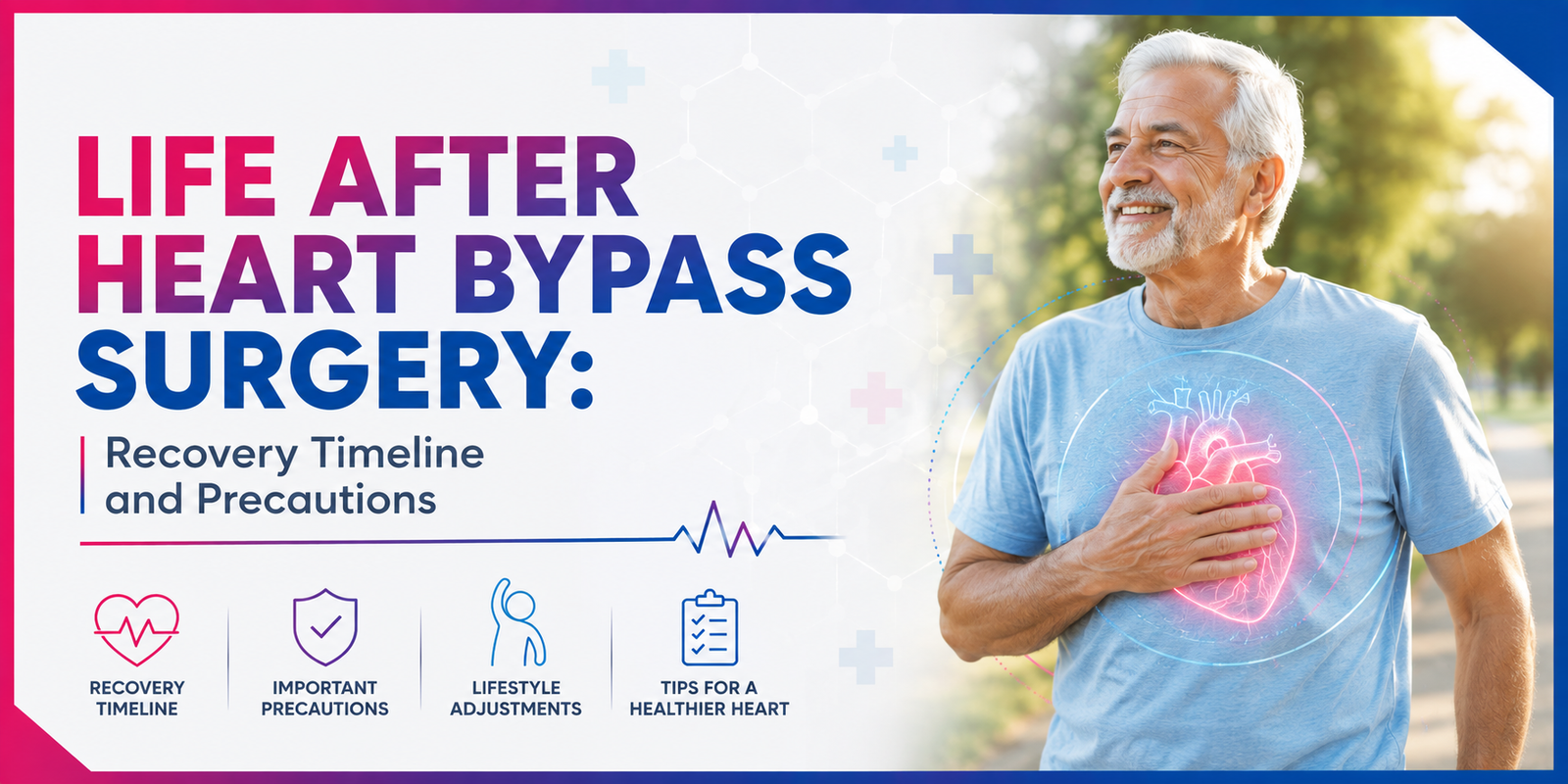
If you or someone in your family is about to undergo bypass surgery, or has just come out of one, chances are your mind is full of questions. How long will recovery actually take? What can go wrong? Life after heart bypass surgery? These are fair questions, and honestly, most patients and their families have the same worries.
Heart bypass surgery, or CABG (Coronary Artery Bypass Graft) as doctors call it, has become fairly common across India. With our diets, sedentary jobs, and stress levels, coronary artery disease is showing up earlier than it used to. The good news is that the surgery itself has come a long way, and so has the recovery process. But recovery isn’t something that happens overnight, it’s a journey with its own ups and downs.
This blog walks you through what that journey usually looks like: the heart bypass surgery recovery time, the precautions you’ll need to follow, food choices, exercise, and the everyday questions people don’t always think to ask their doctor, like when they can drive again or head back to the office. If surgery is still ahead of you, it’s worth reading up on heart bypass surgery itself before we get into recovery.
In simple terms, bypass surgery gives blood a new route to reach your heart when the original artery is too blocked to do its job. Surgeons usually take a healthy vein or artery, often from the leg or chest, and use it to reroute blood flow around the blockage. It’s generally suggested when blockages are too severe for medicines or angioplasty to handle on their own. You can read more about how the procedure works on our heart bypass surgery page.
The first couple of days are spent in the ICU, where the medical team keeps a close eye on your heart rate, breathing, and vitals. From there, you’re usually moved to a regular room. This early phase can feel rough, and that’s completely normal. You might notice:
None of this means something’s wrong. It’s just your body doing the work of healing. The nurses will get you doing breathing exercises early on, which feels tedious but genuinely helps your lungs recover faster.
Everyone heals at their own pace, but there’s a general pattern most patients follow. Here’s a rough breakdown of what recovery tends to look like, stage by stage.
Recovery Stage | What’s Happening | What You Should Be Doing |
Week 1–2 | Discharge from hospital (usually 7–10 days post-surgery, if no complications). Body is in early healing mode. | Focus on rest, short indoor walks, and keeping the wound clean. Avoid lifting anything heavy or driving. |
Week 3–4 | Energy starts returning gradually. This is when things feel a bit more manageable. | Slightly longer walks, light household chores. Afternoon naps are still normal, don’t fight them. |
Week 5–8 | Cardiac rehab usually begins around this stage. | Supervised exercise, dietary guidance, and lifestyle coaching, often provided by the hospital’s rehab program. |
Month 3 onward | Most people are back to handling the bulk of their daily activities. | Doctors often clear patients for light exercise and, in many cases, a return to work. |
Month 3–6 | Full healing continues, especially of the breastbone if it was opened during surgery. | Continue follow-ups, stay consistent with medication and lifestyle changes. |
The physical timeline is one part of the story, though. The emotional side of recovery, getting used to a “new normal” and not panicking over every twinge in the chest, often takes a little longer than the physical healing does. That’s okay too.
A lot of complications after bypass surgery are avoidable if you’re careful in the first couple of months. Some things worth keeping in mind:
It also helps to know the warning signs of heart trouble in general, not just for now but for the years ahead. We’ve covered this in detail in our post on heart attack warning signs, causes, risk factors, and prevention tips.
Let’s be honest, Indian food and heart health don’t always get along. Between the ghee, the fried snacks, and the pickle jar that never seems to empty, most of us grew up eating in ways that aren’t exactly kind to our arteries. Recovery is a good time to reset that.
What to lean into:
What to cut back on:
Smaller, more frequent meals tend to sit better than three big ones, and staying hydrated matters more than people realise. If you’re looking for broader lifestyle tips beyond just food, our post on daily habits for a healthy lifestyle is worth a read.
Movement is important, but it needs to be reintroduced slowly, not all at once.
In the first month, short walks a few times a day are usually enough. Nothing fancy, just gentle movement to keep the blood flowing. Once cardiac rehab starts around weeks five to eight, you’ll likely do supervised sessions involving treadmill walking, light cycling, and stretching. After about 8 to 12 weeks, if your doctor’s happy with your progress, you can slowly start picking up the pace.
What you want to avoid is jumping into heavy weights, intense workouts, or contact sports before your cardiologist clears you, which is usually around the three-month mark. Cardiac rehab programs are genuinely worth attending if your hospital offers them. They combine physical training with emotional support, and both matter just as much for recovery.
It really depends on what your job involves. If you’re at a desk most of the day, you can typically return in about 4 to 6 weeks, once your doctor gives the okay. If your work is physically demanding, think construction, factory floors, or anything requiring heavy lifting, you’re looking at 8 to 12 weeks, sometimes longer.
Whatever your job, get a proper sign-off from your surgeon before heading back, and consider easing in with shorter hours at first rather than diving straight into a full day.
Not right away. Most doctors advise waiting at least 4 to 6 weeks. Sudden braking or sharp turns can put pressure on your healing chest, and reflexes can be a little off in the early weeks too, sometimes due to medication. Your doctor will tell you when it’s genuinely safe to get behind the wheel again.
This is probably the question weighing on people’s minds the most, even if they don’t say it out loud. The reassuring part is that bypass surgery, done well and followed up with the right lifestyle changes, tends to add many good years to a person’s life. It’s not unusual for patients to go on living active, healthy lives for 15 to 20 years or more after surgery, and outcomes keep improving as surgical techniques advance.
What actually determines how well things go long-term usually comes down to:
Think of the surgery as a fresh start rather than a finish line. What you do with that fresh start matters just as much as the operation itself.
Some symptoms shouldn’t wait for your next scheduled appointment. Call your doctor right away if you notice:
And even when everything feels fine, don’t skip your regular follow-ups. They’re how small issues get caught before they turn into big ones. If you’re in Jaipur or anywhere in Rajasthan, Dr. Ajay Sharma is someone patients often turn to for cardiac care and long-term follow-up after bypass surgery.
Good recovery isn’t just about the surgery going well, it’s about the care that comes after. As one of the best multispeciality hospitals in Jaipur, Rungta Hospital’s Heart Bypass Surgery Department brings together experienced cardiac surgeons, well-equipped facilities, and rehabilitation support that actually helps patients recover with confidence, not just discharge instructions handed over on a piece of paper.
Life after heart bypass surgery does ask a bit of patience from you. There will be slow days, and some frustration along the way, that’s just part of it. But if you follow the timeline, respect the precautions, eat with your heart in mind, and don’t skip your follow-ups, there’s a good, active life waiting on the other side of this recovery.
If you or someone close to you needs cardiac care or guidance after bypass surgery, the team at Rungta Hospital is there to help. Feel free to book a consultation whenever you’re ready.
How long does it take to recover from bypass surgery?
Most people feel close to normal within about 3 months, though full healing of the chest bone can take up to 6 months.
Can I drive after bypass surgery?
It’s best to wait at least 4 to 6 weeks, and only once your doctor confirms you’re ready.
What is the normal life expectancy after bypass surgery?
With good follow-up care and lifestyle changes, many patients go on to live 15 to 20 years or more with a good quality of life.
When can I go back to work after bypass surgery?
Desk jobs usually allow a return in 4 to 6 weeks, while physically demanding work may need 8 to 12 weeks or more.
What diet should I follow after bypass surgery?
Stick to whole grains, fresh vegetables, lentils and lean protein, and healthy fats, while cutting back on fried food, excess salt, and sugar.
If you notice any of these signs in yourself or someone around you, don’t wait it out. Call for help immediately. Rungta Hospital’s neurology and critical care teams are available 24/7 for exactly this kind of emergency.
Emergency Contact: +91-8955000333 Book an Appointment: rungtahospital.com/book-an-appointment
Movement is important, but it needs to be reintroduced slowly, not all at once.
In the first month, short walks a few times a day are usually enough. Nothing fancy, just gentle movement to keep the blood flowing. Once cardiac rehab starts around weeks five to eight, you’ll likely do supervised sessions involving treadmill walking, light cycling, and stretching. After about 8 to 12 weeks, if your doctor’s happy with your progress, you can slowly start picking up the pace.
What you want to avoid is jumping into heavy weights, intense workouts, or contact sports before your cardiologist clears you, which is usually around the three-month mark. Cardiac rehab programs are genuinely worth attending if your hospital offers them. They combine physical training with emotional support, and both matter just as much for recovery.