
Food Rich Vitamin B12: Benefits, Sources & Daily Intake

Facing health issues? Feeling tired, having issues with concentration, and experiencing weakness can be a sign of vitamin B12 deficiency. This vitamin is quite essential and may be required in small amounts on a daily basis, but it plays a major role in helping the overall functioning of human body and keeping it healthy. Food rich vitamin B12 consumed on a daily basis can help you in supporting your red blood cells, DNA production, energy metabolism and nerves. So, what are different types of food sources that are rich with vitamin B12? If that’s what you’re wondering, then here is a blog helping you understand vitamin B12 and its sources: What is Vitamin B12 and Why is it Important? Before focusing on the best food for vitamin B12, let’s learn about its importance here: Vitamin B12, a water-soluble vitamin, is indeed one of the most essential vitamins for overall human body and its functions. Also known as cobalamin, it helps in: producing red blood cells, DNA production, Supports energy metabolism, and supports normal nerve function. It also prevents weakness and fatigue. However, your body cannot make vitamin B12 naturally so that you can fulfil the need for the vitamin with the help of supplements and food. Key Benefits of Foods Rich in Vitamin B12 Why every individual needs to include foods rich in vitamin B12 in their daily diet? What are its benefits? There are plenty of benefits, such as: B12 is known for accelerating the production of normal red blood cells and aids in healthy blood formation. It is quite helpful in supporting healthy nerve cell function, normal cell function, and nerve signalling. B12 is known for helping the body convert food nutrients into energy metabolism. Also helps in DNA production and supports brain and cognitive function. Top Foods Rich in Vitamin B12 What is some top food rich Vitamin B12? Which food are really essential to include daily in my diet? If these are some questions that you are thinking about, then let’s know about it in detail here: Animal-Based Sources of Vitamin B12: Animal-based foods are not only rich in vitamin B12, but also offer other essential nutrients such as protein, calcium, and more. If you’re searching for non-vegetarian vitamin B12 sources, then some of the few options that you can consider include: Mutton, turkey and chicken are great sources in the meat and poultry categories. Sardines, trout, clams, tuna, salmon, mackerel, rohu, and hilsa are great sources of vitamin B12 in the seafood category. Eggs are also a great option. Vegetarian Foods Rich in Vitamin B12 For vegetarians, it can become quite difficult to maintain a healthy vitamin B12 intake on a regular basis, as most foods don’t contain it naturally. Some popular product options include: Dairy products, such as milk, paneer (cottage cheese), yoghurt and other dairy products, are popular natural sources. Nutritional yeast and eggs. Fortified breakfast cereals – Cornflakes, muesli, bran flakes, and other ready-to-eat breakfast cereals, etc. Fortified plant-based milk – Soy milk, almond milk, oat milk, and coconut milk, etc. Note: Make sure to check the ingredient list for vitamin B12/cobalamin. How Much Vitamin B12 Do You Need Daily? Now that you know about vitamin B12-rich foods, you are probably wondering how much B12 you need to consume on a daily basis. Well, it depends upon the age and life stage of an individual. As per the National Institutes of Health (NIH), on average, the daily B12 intake for adults is 2.4 mcg per day. For pregnant women, it is 2.6 mcg per day. It differs for breastfeeding women, which is 2.8 mcg per day. In comparison to non-vegetarians, vegetarians and vegans may need to pay extra attention to supplements and fortified foods in order to meet their daily vitamin B12 intake. You can read also:- What Happens in the ICU? A Guide for Patients’ Families Daily Vitamin B12 Needs by Age Group Before you start consuming food rich in vitamin B12 in your daily diet, it is best to know about the average daily intake as per your age and life stage. Let’s know about it with the help of the table below: Age Group Recommended Daily Vitamin B12 Intake Birth–6 months 0.4 mcg* 7–12 months 0.5 mcg* 1–3 years 0.9 mcg 4–8 years 1.2 mcg 9–13 years 1.8 mcg 14–18 years 2.4 mcg Adults 19+ years 2.4 mcg Pregnant women 2.6 mcg Breastfeeding women 2.8 mcg Conclusion Vitamin B12 deficiency can take a toll on your body as it plays an important role in supporting overall health. That is why make sure to include food rich vitamin B12 for better health. Suffering from a deficiency and not sure what to do? Wondering about your nutritional status? Rungta Hospital is one of the most trusted hospitals that you can count on for dedicated clinical nutrition and dietetic support. We offer a comprehensive range of services, from whole-body checkups to diagnostic testing facilities, to better understand your nutritional needs. Reach out to our expert team today and get custom guidance for better health and overall well-being. FAQs: What are the best natural food sources of vitamin B12? Some food rich vitamin B12 in non-vegetarian categories include fish, chicken, liver, eggs, and dairy products, such as milk, yoghurt, and cheese. Are there any plant-based foods that contain vitamin B12? No, plant-based foods do not contain vitamin B12 naturally. Some fortified foods rich in vitamin B12 include nutritional yeast, tofu, soya milk, breakfast cereals, and dairy products. What are the symptoms of vitamin B12 deficiency? Some of the common symptoms of deficiency include tingling in both hands and feet, weakness, fatigue, numbness, memory issues, mood swings, and pale skin. It is best to include vitamin B12-rich foods and supplements to balance your regular B12 intake. How much vitamin B12 should I consume daily? On average, adults require 2.4 micrograms of vitamin B12 per day. However, it differs as per age and life stage. One can consume foods with vitamin B12 sources
What Is a Routine Blood Test? A Complete Guide to Blood Testing
You’ve been tired for weeks now. Not the “had a rough night” kind of tired, the kind where you sleep eight hours and still feel like you ran a marathon in your dreams. Or maybe it’s the opposite problem: the weighing scale keeps dropping numbers and you haven’t changed a single thing about your diet or your gym routine. You mention it to someone, and you get the same answer everyone gives: “Just get a blood test done.” Fair enough. But what is a routine blood test actually looking for? And how do you know when it’s time to stop putting it off and actually book one, instead of telling yourself it’s probably nothing? Here’s everything worth knowing, what these tests are, the common types you’ll come across, what they can catch before things get serious, and when it’s genuinely time to get checked. What Is a Routine Blood Test ? In simple terms, a routine blood test is a set of standard lab checks your doctor uses to get a snapshot of how your body is doing often before you’ve noticed anything is wrong. It’s different from a diagnostic test, which is ordered to confirm one specific suspected problem. A routine test casts a wider net. It looks at your blood cells, how your organs are functioning, your sugar levels, and more, all from one sample. Your blood, it turns out, carries a surprising amount of information about almost every organ in your body. A kidney that’s struggling to filter waste, iron levels quietly dropping, a thyroid that’s overworking itselfa lot of this shows up in blood work long before you’d feel it. Doctors usually order these tests: During your annual health check-up, even when you feel completely fine Before starting a new medication When something feels off and they need to narrow down why To keep tabs on an existing condition, like diabetes or a thyroid issue Before a surgery, just to confirm you’re fit for the procedure The Types of Blood Tests You’ll Actually Come Across Not every blood test is checking for the same thing, so it helps to know what’s what. Complete Blood Count (CBC) Test If you’ve ever had blood drawn for a general check-up, chances are it included a complete blood count (CBC) test. It’s usually the first thing doctors order, and for good reason, it measures three things: Red blood cells (RBCs): These carry oxygen around your body. Low numbers often point to anemia. White blood cells (WBCs): Your infection-fighters. A spike can mean your body’s fighting something off; a drop can hint at immune trouble. Platelets: These help your blood clot properly when needed. If you’ve ever wondered why doctors track platelet counts so closely during fever season, our guide on dengue vs. viral fever explains it well. A CBC also checks your hemoglobin and hematocrit levels, which round out the picture of how well your blood is carrying oxygen. If you’ve been feeling drained for no clear reason, this is almost always the first test your doctor reaches for constant low energy is genuinely one of the most common reasons people end up getting one. Blood Test for Diabetes A blood test for diabetes looks at how your body handles blood sugar, and it’s usually done through two checks: Fasting blood glucose test: Checks your sugar levels after not eating for 8-10 hours. HbA1c test: Rather than a single-day reading, this shows your average blood sugar over the past two to three months. Here’s the thing about diabetes, early on, and even in the prediabetes stage, it often doesn’t show any obvious symptoms at all. Unexplained weight loss is one of the exceptions worth paying attention to. It can be a sign your body isn’t processing glucose the way it should, and it’s a fairly common reason doctors will ask for this test even when nothing else seems wrong. If you want to understand what your numbers actually mean, our normal blood sugar levels chart breaks it down by age and gender. Liver and Kidney Function Tests These two panels check how well your liver and kidneys, your body’s main filtration systems are actually doing their job, by measuring specific enzymes, proteins, and waste products in your blood. They’re a routine part of most check-ups simply because problems here tend to build up quietly for years before you’d ever notice a symptom. If your liver values come back abnormal, it’s worth knowing what that can lead to, our article on jaundice symptoms, causes, and treatment is a good starting point. And if it’s your kidneys that need attention, take a look at our guides on kidney failure symptoms, kidney stones, and the kidney-friendly diet chart, all put together by our Nephrology department. Lipid Profile and Thyroid Tests A lipid profile measures your cholesterol and triglyceride levels to gauge your heart disease risk. If you’re curious about getting this done at home, we’ve also covered home cholesterol testing kits and what your results mean. When Should You Get a Blood Test? There’s no universal rule for everyone, but a few situations should nudge you to actually book the test instead of waiting it out. You’re constantly tired, no matter how much you sleep. This is one of the most common reasons people start wondering, should I get a blood test and honestly, it’s a good instinct to follow. Ongoing fatigue can be tied to anemia, thyroid issues, vitamin deficiencies, or blood sugar problems, and a basic panel usually picks up on all of these. You’ve dropped weight without trying to. Unexplained weight loss isn’t something to shrug off. It can be one of the earlier signs of diabetes, a thyroid disorder, or another metabolic issue, and getting a blood test done is often the first step toward figuring out what’s actually going on. Something else feels off. Constant headaches, hair falling out more than usual, irregular periods, trouble concentrating, or cuts that take forever to heal, these can all trace
What Happens in the ICU? A Guide for Patients’ Families

The call usually comes without warning. A doctor says the words “we’re shifting them to the ICU,” and suddenly a family that was worried a minute ago is now frightened. Not because anyone has explained what’s actually going on, but because the word ICU itself carries so much weight. Most families walk into that corridor for the first time not knowing what to expect. The glass doors, the buzzing machines, the strict visiting slots, it all feels designed to keep you out rather than help your loved one. It isn’t. Every rule in the ICU exists for a reason, and once you understand what happens in the ICU, the whole experience becomes a little less frightening and a lot more manageable. This ICU guide for families walks through exactly that, what the ICU is for, what the equipment around the bed actually does, how visiting works, and how you can support your loved one even when you can only see them for a few minutes a day. What Is the ICU, and Why Do Patients Get Shifted There? The Intensive Care Unit, also called Critical Care, is the part of the hospital built for patients whose condition needs to be watched every minute, not just checked in on a few times a day. It isn’t reserved only for the most severe cases either, patients recovering from major surgery, a serious infection, a heart attack, a stroke, or a bad accident are often moved here purely as a precaution, so any change in their condition is caught the moment it happens. The core idea behind critical care is simple: give the body the support it needs, whether that’s help breathing, medication delivered continuously, or close observation of the heart and kidneys, so it has the best possible chance to stabilise and recover. Patients recovering from procedures like heart bypass surgery, for instance, often spend a short, planned stay in the ICU simply so the heart can be monitored closely in the first day or two. ICU vs General Ward — What’s Actually Different? Families often ask why the rules feel so much stricter here than on a regular floor. The ICU vs general ward difference comes down to a few things: Staff attention — In the ICU, one nurse usually looks after just one or two patients. On a general ward, that ratio is much higher, simply because patients there don’t need minute-to-minute monitoring. Equipment — ICU beds are surrounded by continuous monitors, ventilators, and infusion pumps. A general ward relies on periodic checks instead. Visiting hours — General wards allow longer, more relaxed visits. The ICU keeps them short and controlled, mainly to reduce infection risk and let patients rest. Purpose — A general ward is for patients who are stable and on the road to recovery. The ICU is for patients whose condition could change quickly and needs constant supervision. None of this is about restricting families for the sake of it. It’s what allows the ICU team to catch small changes before they become emergencies. What to Expect When a Loved One Is in ICU Nothing quite prepares you for the first walk-in. Here’s roughly what to expect when a loved one is in ICU, so it feels a little less alarming: Wires and tubes everywhere. Each one is connected to a monitor or a treatment line, not a sign that something has gone wrong. A sedated or drowsy patient. Many ICU patients, especially those on ventilators, are kept lightly sedated. They may not respond right away, even if they can hear you. Numbers constantly changing on screens. Heart rate, blood pressure, oxygen levels — small fluctuations are normal. That’s precisely what the team is tracking. A quiet, dim environment. ICUs are deliberately kept low on noise and light to help patients rest. Doctors doing rounds multiple times a day. Treatment plans in the ICU are adjusted constantly based on how the patient is responding, not just once a day like on a general ward. If something you see looks concerning, ask the nurse on duty. ICU staff are used to explaining this to families, and a two-minute conversation can ease a lot of unnecessary worry. ICU Monitoring Equipment Explained The machines are often the scariest part for families, mostly because nobody explains what they do. Here’s a simple breakdown, with the ICU monitoring equipment explained in everyday terms: Cardiac monitor — Tracks heart rate and rhythm continuously, shown as a moving line on the screen. Pulse oximeter — A small clip, usually on the finger, measuring blood oxygen levels. Ventilator — Helps or fully takes over breathing when the patient can’t manage on their own. Being on a ventilator doesn’t mean the situation is hopeless, many patients are gradually weaned off it as they recover. IV pumps — Deliver fluids, medication, or nutrition at a precisely controlled rate. Catheters and drains — Monitor urine output, an important sign of how well the kidneys and other organs are functioning, or drain fluid after surgery. Automated blood pressure cuff — Takes readings at set intervals rather than manually, so nothing gets missed between checks. Every wire and screen is there to give the medical team real-time information, not to alarm the family standing beside the bed. ICU Visiting Rules for Family Because infection control and patient rest matter so much here, ICU visiting rules for family tend to be far stricter than what you’re used to on a general ward. While the exact policy varies slightly by hospital, most ICUs follow something similar to this: Short, fixed visiting slots, usually once or twice a day One visitor at a time, occasionally two depending on the patient’s condition Hand hygiene, and sometimes a gown or mask, before entering No visits from children or anyone showing signs of infection, fever, or cough One designated family member as the point of contact, so updates from the doctor don’t get repeated or miscommunicated across multiple relatives It helps enormously to decide early
Typhoid vs Viral Fever: How to Tell the Difference

Every year, once the monsoon settles into Jaipur, the same thing happens. The rain brings relief from the heat, but it also brings a spike in fevers, and the OPDs start filling up with patients who all say the same thing: “It’s just a fever, but it’s not going away.” Most of the time it turns out to be a viral fever that runs its course in a few days. But sometimes, it’s typhoid, and treating it like an ordinary viral infection can mean losing precious time. We’ve already written about how dengue can be confused with viral fever, and typhoid is another one of those fevers that looks deceptively similar at first glance but behaves very differently once you look closer. So how do you actually tell typhoid vs viral fever apart before a blood test gives you the final answer? Let’s break down the difference between typhoid and viral fever, symptom by symptom. What Is Typhoid Fever? Typhoid fever is caused by a bacterium called Salmonella typhi, and it doesn’t spread through the air or a sneeze. It spreads through contaminated food and water. That’s exactly why cases climb during the monsoon in Jaipur, heavy rain contaminates water sources, vegetable vendors wash produce in questionable water, and street food stalls become riskier than usual. If someone in your household develops a slow-building fever a week or two after the rains hit hard, typhoid should be on your radar. What Is a Viral Fever? Viral fever, on the other hand, is caused by any number of common viruses circulating in the air or spreading through close contact, a sneeze on a crowded bus, a shared water bottle, a classroom full of coughing kids. It’s the kind of fever most of us have had a dozen times in our lives. It comes on fast, makes you feel wiped out for a few days, and then leaves just as fast once your immune system does its job. The transmission route is really the first big clue: typhoid comes from what you ate or drank, viral fever comes from who you were around. Typhoid Fever Symptoms vs Viral Fever Symptoms This is where most people get confused, because both start with the same word: fever. But if you pay attention to how the illness unfolds, the differences show up quickly. Typhoid fever symptoms tend to build gradually rather than hit all at once. Look out for: A fever that climbs a little more each day instead of spiking suddenly Persistent stomach pain or discomfort Constipation in adults, sometimes diarrhea in children Loss of appetite and unusual fatigue that doesn’t match the fever’s intensity In some cases, flat, rose-colored spots on the chest or abdomen A pulse rate that feels slower than you’d expect for how high the fever is Viral fever symptoms usually show up together, all at once: Sudden high fever, often with chills Body ache and joint pain Sore throat, runny nose, or a cough Fever that responds well to paracetamol and comes back down within a few hours If you’re dealing with a fever that came on overnight along with a cold and sore throat, it’s very likely viral. If it’s a fever that has been quietly climbing for four or five days with stomach discomfort and no signs of a cold, typhoid becomes a real possibility, and that’s exactly how to identify typhoid fever early rather than waiting it out. Typhoid Fever Temperature Pattern One detail doctors often look for is the typhoid fever temperature pattern itself. In typhoid, the fever classically follows what’s called a “stepladder” pattern, it rises a little each day for the first week, often peaking in the evenings, rather than shooting up suddenly and staying flat. Viral fever behaves almost the opposite way: it spikes quickly, sometimes within hours of the first symptom, and then plateaus or comes down with medication and rest. If you’re tracking your fever with a thermometer twice a day and you notice it inching upward day after day rather than bouncing around a similar range, that stepwise climb is one of the clearer signs pointing toward typhoid rather than a viral infection. How Long Does Each One Last? This is one of the most practical differences, and it’s often what makes people finally see a doctor. Typhoid fever duration, if left untreated, can stretch on for two to four weeks, and the fever tends to get worse before it gets better. With the right antibiotics, most people start improving within three to five days, though full recovery still takes a couple of weeks. Viral fever duration is much shorter. Most viral fevers resolve on their own within three to seven days with rest, fluids, and basic fever management. If a “viral fever” is still hanging around after a week, it’s worth questioning whether it was ever viral to begin with. How Do You Know If Your Fever Is Typhoid? Here’s a simple way to think about it. Ask yourself: Has the fever lasted more than four or five days without a clear pattern of improvement? Is there ongoing stomach pain, bloating, or a change in bowel habits alongside the fever? Is there an unusual, disproportionate tiredness compared to how a typical viral fever feels? Did the fever start after eating outside food, street food, or drinking water you weren’t fully sure about? If you’re answering yes to more than one of these, it’s time to stop guessing. This is exactly the situation where our General Medicine specialists can help you get a proper diagnosis instead of relying on symptoms alone, because self-diagnosing typhoid from home is genuinely difficult even for people with medical knowledge. Diagnosis: Tests That Confirm Typhoid The only reliable way to confirm typhoid is through a blood test. Doctors typically use the Widal test, a Typhidot test, or a blood culture, with blood culture generally considered the most accurate, especially in the first week of illness. Viral fever, by contrast, doesn’t usually need a
Life After Heart Bypass Surgery: Recovery Timeline and Precautions
If you or someone in your family is about to undergo bypass surgery, or has just come out of one, chances are your mind is full of questions. How long will recovery actually take? What can go wrong? Life after heart bypass surgery? These are fair questions, and honestly, most patients and their families have the same worries. Heart bypass surgery, or CABG (Coronary Artery Bypass Graft) as doctors call it, has become fairly common across India. With our diets, sedentary jobs, and stress levels, coronary artery disease is showing up earlier than it used to. The good news is that the surgery itself has come a long way, and so has the recovery process. But recovery isn’t something that happens overnight, it’s a journey with its own ups and downs. This blog walks you through what that journey usually looks like: the heart bypass surgery recovery time, the precautions you’ll need to follow, food choices, exercise, and the everyday questions people don’t always think to ask their doctor, like when they can drive again or head back to the office. If surgery is still ahead of you, it’s worth reading up on heart bypass surgery itself before we get into recovery. A Quick Word on What Bypass Surgery Actually Does In simple terms, bypass surgery gives blood a new route to reach your heart when the original artery is too blocked to do its job. Surgeons usually take a healthy vein or artery, often from the leg or chest, and use it to reroute blood flow around the blockage. It’s generally suggested when blockages are too severe for medicines or angioplasty to handle on their own. You can read more about how the procedure works on our heart bypass surgery page. What to Expect After Heart Bypass Surgery The first couple of days are spent in the ICU, where the medical team keeps a close eye on your heart rate, breathing, and vitals. From there, you’re usually moved to a regular room. This early phase can feel rough, and that’s completely normal. You might notice: Feeling wiped out, even after small tasks Soreness or tightness around the chest where the incision is Some swelling in the legs, especially if a vein was taken from there A scratchy throat or slightly hoarse voice from the breathing tube used during surgery None of this means something’s wrong. It’s just your body doing the work of healing. The nurses will get you doing breathing exercises early on, which feels tedious but genuinely helps your lungs recover faster. How Long Does Recovery Actually Take? Everyone heals at their own pace, but there’s a general pattern most patients follow. Here’s a rough breakdown of what recovery tends to look like, stage by stage. Recovery Stage What’s Happening What You Should Be Doing Week 1–2 Discharge from hospital (usually 7–10 days post-surgery, if no complications). Body is in early healing mode. Focus on rest, short indoor walks, and keeping the wound clean. Avoid lifting anything heavy or driving. Week 3–4 Energy starts returning gradually. This is when things feel a bit more manageable. Slightly longer walks, light household chores. Afternoon naps are still normal, don’t fight them. Week 5–8 Cardiac rehab usually begins around this stage. Supervised exercise, dietary guidance, and lifestyle coaching, often provided by the hospital’s rehab program. Month 3 onward Most people are back to handling the bulk of their daily activities. Doctors often clear patients for light exercise and, in many cases, a return to work. Month 3–6 Full healing continues, especially of the breastbone if it was opened during surgery. Continue follow-ups, stay consistent with medication and lifestyle changes. The physical timeline is one part of the story, though. The emotional side of recovery, getting used to a “new normal” and not panicking over every twinge in the chest, often takes a little longer than the physical healing does. That’s okay too. Precautions After Bypass Surgery A lot of complications after bypass surgery are avoidable if you’re careful in the first couple of months. Some things worth keeping in mind: Don’t lift anything heavier than around 5 kg for at least 6 to 8 weeks. Your breastbone needs time to knit back together. Keep the incision clean and dry, and watch for redness, swelling, or discharge, these could be early signs of infection. Take your medicines exactly as prescribed. Don’t stop, skip, or change doses on your own, even if you’re feeling fine. Cut out smoking and alcohol completely. This isn’t just advice for after surgery, it’s advice for life now. Try to keep stress in check, whether that’s through breathing exercises, meditation, or gentle yoga once your doctor gives the go-ahead. Sleep matters more than people realise during recovery, so don’t skimp on it. Pay attention to your body. Chest pain, an irregular heartbeat, unusual breathlessness, or sudden swelling are all reasons to call your doctor right away, not wait it out. It also helps to know the warning signs of heart trouble in general, not just for now but for the years ahead. We’ve covered this in detail in our post on heart attack warning signs, causes, risk factors, and prevention tips. Diet After Heart Bypass Surgery Let’s be honest, Indian food and heart health don’t always get along. Between the ghee, the fried snacks, and the pickle jar that never seems to empty, most of us grew up eating in ways that aren’t exactly kind to our arteries. Recovery is a good time to reset that. What to lean into: Whole grains, think oats, brown rice, and whole wheat roti instead of maida-based options Plenty of fresh vegetables and fruits Dal, lentils, sprouts, fish, and skinless chicken for protein Healthy fats in moderation, like nuts, seeds, or a bit of mustard or olive oil Low-fat curd and milk instead of the full-fat versions What to cut back on: Fried snacks like samosas, pakoras, and puris Salt-heavy processed and packaged food Red meat and full-fat dairy Sweets,
Stroke Strikes in Seconds, You Have Just 3 Hours to Save a Life

It’s usually the most ordinary moment. Someone is eating dinner, or walking back from the market, or just sitting on the sofa scrolling through their phone and suddenly something feels off. A hand drops the cup. A sentence comes out slurred. Most families don’t think “stroke” in that moment. They think the person is tired, or maybe just needs to sit down for a bit. That hesitation is exactly what makes stroke so dangerous. It doesn’t announce itself, and the person having it is often the last one to realise something is seriously wrong. Here’s the thing though, stroke is one of those rare emergencies where knowing what to do during a stroke in the first few minutes genuinely changes the outcome. Doctors call this the “golden hour,” and honestly, more families should know about it than currently do. This article walks through what actually happens in the brain during a stroke, how to spot it in under a minute using the FAST test, and what to actually do while you’re waiting for help to arrive not the vague “call a doctor” advice, but real steps. What Happens in Your Brain During a Stroke? In simple terms, a stroke happens when blood stops reaching part of the brain, either because something is blocking the artery, or because a blood vessel has burst. No blood means no oxygen, and brain cells start dying within minutes. Once they’re gone, that’s it. They don’t regenerate. There are two types, and they matter because treatment is different for each: Ischemic stroke — a clot blocks the artery. This is by far the more common type. Hemorrhagic stroke — a blood vessel bursts and bleeds into the brain. You can’t tell which one it is just by looking at the person, that’s why a hospital visit with scans isn’t optional, it’s the only way doctors know what treatment to actually give. This is also why stroke care almost always involves a neurology team from the very first assessment. The Golden Hour – Why Every Minute Counts You’ve probably heard “golden hour” mentioned for accident victims. In stroke care, it means something similar but even more precise. The golden hour stroke treatment window is the first 60 minutes after symptoms start, the point where treatment has the best chance of preventing lasting damage. Here’s a number that tends to stick with people once they hear it: roughly 1.9 million neurons die every minute a stroke goes untreated. That’s not a scare tactic, it’s just how fast brain tissue is affected without blood flow. Now, the golden hour is the ideal, but in real hospital settings, doctors usually work with a slightly wider window for clot-dissolving medication, somewhere between 3 to 4.5 hours from when symptoms began. This is really what people mean when they talk about stroke treatment in first 3 hours, it’s the practical target, not the absolute ideal. Past that window, the options narrow fast, and so does the chance of a good recovery. The FAST Test – Recognise a Stroke in Under 60 Seconds There’s a simple test that emergency doctors use worldwide, and it takes less time to do than it does to read about it. It’s called FAST, and if you have elderly parents or grandparents at home, this is genuinely worth memorising. F – Face Ask them to smile. Does one side droop, or look uneven compared to the other? A – Arms Have them raise both arms together. Does one arm sag or drift down while the other stays up? S- Speech, Ask them to say a simple sentence out loud. Does it sound slurred, or just… off? T – Time If any of this shows up, don’t wait around to see if it passes on its own. Call for help right away, and make a mental (or actual) note of what time the symptoms started — the treating doctor will ask. A few other symptoms worth watching for, even outside the FAST checklist: A sudden, severe headache that comes out of nowhere Blurred or lost vision, in one eye or both Sudden confusion, or trouble following a conversation Dizziness or a loss of balance that appears out of nowhere If even one of these shows up suddenly, it’s safer to treat it as a stroke and get moving rather than wait to see what happens. What to Do During a Stroke – A Step-by-Step Guide This is the part that actually matters most in the moment, what to do during a stroke once you suspect one. In the panic, people tend to freeze or do the wrong thing, so it helps to have this in your head beforehand. Note the time the symptoms first appeared, this detail actually decides what treatment options are available later. Call for emergency help immediately. Don’t wait to see if it improves. Keep them lying down and calm, with the head and shoulders slightly raised if that’s possible. Don’t give them food or water. Stroke can affect swallowing, and choking is a real risk. Loosen anything tight around the neck so breathing isn’t restricted. Stay with them and keep an eye on any changes until help gets there. A Few Things People Get Wrong Waiting to “see if it passes.” Even if the symptoms disappear in a few minutes, that could be a mini-stroke (TIA) and it’s often a warning sign that a bigger one is coming. Driving them to the hospital yourself. An ambulance can start assessing the patient on the way and give the hospital a heads-up before arrival, which saves time once you’re there. Giving aspirin or any medication on your own. It sounds helpful, but the wrong medication can actually make a hemorrhagic stroke worse. Stroke and Other Brain Conditions – What Else to Watch For Stroke doesn’t exist in isolation, it’s connected to a wider picture of brain health that families often don’t think about until something happens. For instance, repeated small strokes over time (sometimes without
Kidney Diet Chart: Foods to Eat and Avoid for Kidney Disease
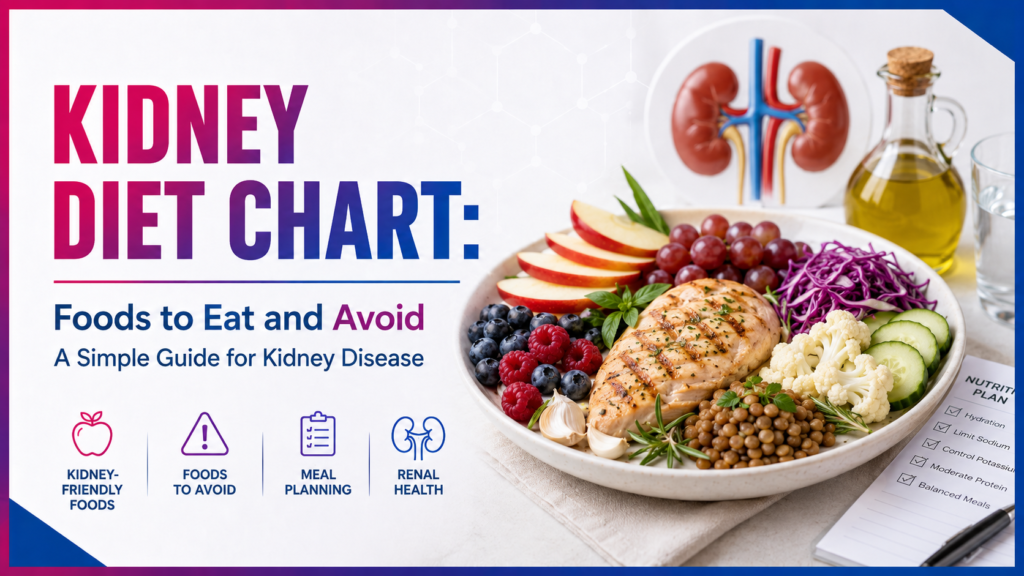
Here’s the tricky thing about kidney disease, it doesn’t usually announce itself. Most people don’t realize anything’s wrong until a routine blood test flags it, or until they notice swelling, tiredness, or changes in how often they’re using the bathroom. By then, some damage may have already started. If you’re not sure what the early warning signs actually look like, take a look at our guide on kidney failure symptoms and early signs, it’s worth reading alongside this one. But whether you’ve just been told you have chronic kidney disease (CKD), you’ve been managing it for a while, or you just want to look after your kidneys before any problems start, food is one of the simplest, most powerful things you can control. It’s also one of the most confusing to get right, with so much conflicting advice out there. So let’s keep this simple: what to eat, what to cut back on, and what an actual day of eating could look like. At Rungta Hospital, we like to pair medical treatment with real, practical food guidance, because honestly, one without the other doesn’t get you very far. In this blog we are going to discuss the kidney diet chart. Why Does Food Even Matter for Your Kidneys? Your kidneys are pretty small, but they do a lot of heavy lifting. Every single day, they filter waste out of your blood, keep your fluid levels balanced, manage minerals like sodium and potassium, and help keep your blood pressure in check. When your kidneys aren’t working as well as they should, because of diabetes, high blood pressure, or something else, that filtering process slows down. Waste, extra fluid, and certain minerals that would normally get flushed out start hanging around in your bloodstream instead. That’s really the whole reason food matters so much here. What you eat and drink directly changes how much sodium, potassium, phosphorus, and protein waste your kidneys have to deal with. Eating “kidney-friendly” doesn’t mean cutting these things out completely, it means keeping them in check, so your kidneys aren’t working overtime. There’s also a bit of overlap with kidney stones here, even though it’s a different condition. Sodium intake and how much water you drink matter for both. If stones have been an issue for you before, our guide on kidney stones – causes, symptoms, and treatment goes into more detail. Foods That Are Good for Your Kidneys Eating for kidney health isn’t about eating less, it’s about eating a bit differently. Here’s what to lean on: Fruits and veggies that are lower in potassium. Think apples, berries, grapes, cabbage, cauliflower, and cucumbers. These are naturally easier on your kidneys than a lot of other produce. If you need to cut potassium even further, soaking your vegetables and boiling them twice (draining the water in between) can help bring the potassium down. Herbs and spices, not salt. Garlic, basil, oregano, rosemary, all of these bring real flavor to your food without adding sodium. Once you get used to cooking this way, a kidney-friendly diet stops feeling so restrictive. Protein, but in the right amount. You do need protein, but too much of it just means more waste for your kidneys to filter out. Smaller portions of chicken, fish, or plant proteins like lentils and beans usually work better than a big plate of red or processed meat. Good fats. Olive oil is a solid go-to. It’s good for your heart too, and that matters, heart disease often shows up alongside kidney problems. Cooking at home. When you cook your own meals, you decide how much salt and oil goes in. Restaurant food and packaged meals rarely give you that kind of control. Foods You Should Cut Back On Three things matter most here: sodium, potassium, and phosphorus. Here’s the deal with each one. Sodium. Salt makes your body hold onto water, which raises blood pressure and puts more strain on kidneys that are already struggling. The real culprits usually aren’t the salt shaker on your table, it’s processed food, pickles, canned soups, packaged snacks, and restaurant meals. Getting into the habit of checking food labels goes a long way. Potassium. Healthy kidneys filter potassium out without any trouble. But when kidney function drops, potassium can build up in your blood and start affecting your heart rhythm. Bananas, oranges, potatoes, and tomatoes are the big ones to watch, though exactly how much you need to limit really depends on your own blood test results and how advanced your kidney disease is. There’s no single number that works for everyone. Phosphorus. Dairy, nuts, and dark colas tend to be high in phosphorus. Over time, extra phosphorus can pull calcium out of your bones and weaken them. Processed deli meats and packaged foods are sneaky here too, since manufacturers often add extra phosphorus that your body absorbs more easily than the phosphorus found naturally in whole foods. Kidney Diet Chart: Foods to Eat vs. Foods to Avoid Here’s everything above, boiled down into one simple chart you can screenshot or keep handy: Nutrient Eat More Of Limit or Avoid Sodium Fresh, home-cooked meals; herbs and spices (garlic, basil, rosemary) instead of salt Pickles, packaged snacks, canned soups, processed and restaurant food Potassium Apples, berries, grapes, cabbage, cauliflower, cucumbers Bananas, oranges, potatoes, tomatoes Phosphorus Fresh fruits and vegetables, home-cooked whole foods Dairy products, nuts, dark colas, processed deli meats Protein Moderate portions of chicken, fish, or plant proteins (lentils, beans) Large servings of red meat or processed meat Fats Olive oil, other unsaturated fats Butter, fried foods, foods high in saturated or trans fats Fluids As advised by your doctor, varies by stage and dialysis status Excess fluid beyond what’s recommended for your condition A quick way to remember it: fresh over packaged, herbs over salt, and portions over quantity. Keep in mind this chart is a general guide, your own limits for potassium, phosphorus, and fluids depend on your lab results and how advanced your kidney disease is,
Newborn to 16 Years: Full Vaccination Schedule for Your Child in India

Table of Contents Right after your baby is born, you’ll be given a small card with a long list of vaccine names and dates. It’s a lot to take in, and it doesn’t help that relatives, online groups, and even different doctors sometimes say different things. This guide gives you one simple vaccination schedule for babies in India, from birth to 16 years, so you have one place to check before every visit. This schedule is the same one followed by doctors at Rungta Hospital, and it matches what most private pediatricians in India use. Why Following a Vaccination Schedule Matters Every vaccine on this list is given at a specific age for a reason. Too early, and it may not work well, the baby still has some protection left over from the mother. Too late, and there’s a gap where the child isn’t protected but is old enough to catch the disease. So the timing isn’t random. It’s set to match exactly when your baby’s body is ready, and exactly when they need it most. Vaccines don’t just protect your own child. They also protect the people around them — younger siblings, grandparents, and other kids at school who may get sicker from these diseases. Government vs. IAP Schedule, What’s the Difference This confuses a lot of parents, so let’s keep it simple.India has two schedules that work together: Government schedule (UIP) — Free vaccines given at government hospitals and health centers. This covers the most important, must-have vaccines for every child. IAP schedule — Made by the Indian Academy of Pediatrics, India’s main group of child doctors. It includes everything in the government schedule, plus a few extra vaccines for wider protection, like PCV, rotavirus, and hepatitis A vaccines. Most private doctors in India, including our team at Rungta Hospital’s Pediatrics department, follow the IAP schedule because it protects against more diseases. If money is tight, the free government vaccines still cover the most serious diseases, polio, TB, diphtheria, tetanus, whooping cough, and measles, so no child should miss those. Talk to your doctor about whether the extra IAP vaccines make sense for your family. One small thing worth knowing : government centers usually give DTwP (an older whooping cough vaccine), while private clinics often give DTaP (a newer version). Both work well. DTaP usually causes milder fever and soreness. Neither one is wrong, just ask your doctor which one they’re giving and why. Child Vaccination Chart: Age-Wise Schedule Here’s the full schedule, laid out by age, so you can check it before every visit. Age Vaccines Due Protects Against At birth BCG, Hepatitis B (1st dose), OPV (birth dose) TB, Hepatitis B, Polio 6 weeks DPT/Pentavalent (1st), OPV (1st), IPV (1st), Rotavirus (1st), PCV (1st) Diphtheria, Whooping cough, Tetanus, Hib, Polio, Rotavirus diarrhea, Pneumonia 10 weeks DPT/Pentavalent (2nd), OPV (2nd), Rotavirus (2nd), PCV (2nd) Same diseases, 2nd dose 14 weeks DPT/Pentavalent (3rd), OPV (3rd), IPV (2nd), Rotavirus (3rd), PCV (3rd) Same diseases, 3rd dose 6 months Hepatitis B (3rd dose), Flu shot (1st, yearly) Hepatitis B, Flu 9–12 months Measles/MMR (1st dose), Typhoid vaccine Measles, Mumps, Rubella, Typhoid 15–18 months MMR (2nd dose), DPT booster (1st), OPV booster, Chickenpox (1st), PCV booster Same diseases plus Chickenpox 2 years Typhoid booster, Hepatitis A Typhoid, Hepatitis A 4–6 years DPT booster (2nd), OPV booster, Chickenpox (2nd, if not given earlier) Diphtheria, Whooping cough, Tetanus, Polio, Chickenpox 10–12 years Tdap/Td booster, HPV vaccine (for both girls and boys) Tetanus, Diphtheria, Whooping cough, HPV-related cancers 16 years Td booster Tetanus, Diphtheria A few simple things to remember about this chart: Combo vaccines (like Pentavalent, which combines DPT, Hepatitis B, and Hib in one shot) mean fewer injections for your baby, with the same level of protection. Missed a dose? No need to start over. Your doctor will just pick up from where you left off. Getting several vaccines in one visit is safe. It’s actually planned that way, several vaccines are given together at 6, 10, and 14 weeks so your baby is protected as early as possible. Special Considerations for Premature or Low-Birth-Weight Babies If your baby was born early or small, this chart may need to be adjusted a bit. Most doctors still vaccinate based on the baby’s actual age since birth, not their due date, but this is a decision best made together with a doctor who knows your baby’s health history, not just by following a general chart. Our Neonatology team at Rungta Hospital works closely with parents of premature and NICU babies to plan vaccines the right way for each child. Side Effects and When to Call a Doctor Most children have mild, short-lived reactions after vaccination: a low-grade fever for a day or two, redness or slight swelling at the injection site, and general fussiness. These are normal signs of the immune system responding, not something to worry about. Contact your doctor promptly if you notice: Fever above 103°F (39.4°C) Difficulty breathing A rash spreading well beyond the injection site A baby who seems unusually unwell or unresponsive in the 24–48 hours after vaccination These serious reactions are rare, but worth knowing so you can act quickly if they do occur. Keeping Track: The MCP Card When your baby is born, you’ll get a Mother and Child Protection (MCP) card. This is the official record of every vaccine your child gets. Keep it safe, schools, doctors, and sometimes even visa applications ask to see it later. Keep it with your other important documents and bring it to every vaccination visit. If it’s lost, reconstructing an accurate vaccine history can be genuinely difficult. Many clinics and pediatric apps also offer digital reminders now, which can help alongside the physical card, but the MCP card remains the official record. Where to Get Your Child Vaccinated in Jaipur It’s much easier to stay on schedule with a doctor who knows your child’s history and can catch anything that needs special attention, especially for babies who had any
Dengue vs. Viral Fever: How to Tell the Difference (Platelet Count Guide)

Table of Contents Monsoon rolls into India, and so does the fever season. Almost everyone knows someone who’s down with a fever right now, a colleague, a neighbor, maybe even someone at home. Most of the time it’s nothing serious, just a viral fever that runs its course in a few days. But every year, dengue cases quietly mix in with all the “normal” fevers, and that’s where things get tricky. Here’s the problem: in the first day or two, dengue and viral fever look almost identical. Fever, body ache, feeling wiped out, both start the same way. So people wait it out, assuming it’s “just a viral,” and by the time they realize it isn’t, the illness has already progressed further than it needed to. This blog is here to help you tell the two apart, what to watch for, what your platelet count is actually telling you, and when it’s genuinely time to stop waiting and see a doctor. If you want to know more about the hospital behind this guide, you can visit Rungta Hospital. What Is Viral Fever, Really? Viral fever is your body doing exactly what it’s supposed to do, fighting off a virus. It’s incredibly common, especially when the weather shifts, and for most people it’s more of an inconvenience than a real worry. Rest, fluids, a few days off, and you’re usually back to normal within 3 to 5 days. You’ll typically notice: A mild to moderate fever Cough, cold, or a sore throat Body ache and general tiredness A dull headache One reassuring thing: with viral fever, your platelet count usually stays where it should be, or dips just slightly. Your body’s simply doing its job, and it bounces back on its own. What Is Dengue Fever? Dengue plays by different rules. It’s spread by the Aedes mosquito, the one that bites during the day, not at night, and tends to breed in stagnant water lying around your home or neighborhood. Unlike a regular viral fever that creeps up slowly, dengue tends to hit fast and hit hard. Watch for: A sudden, high fever, often 102°F or above Body and joint pain so severe it’s earned the nickname “breakbone fever” Pain behind the eyes A skin rash, usually showing up around day 3 or 4 Nausea and vomiting Here’s the part worth remembering: days 4 through 7 are when dengue gets serious. This is the window where platelet count can drop fast, and where close monitoring really matters. Dengue vs. Viral Fever If you’re trying to figure out which one you’re dealing with, this comparison should help: Feature Viral Fever Dengue Fever Fever onset Gradual Sudden and high Body pain Mild Intense — joints and muscles both Duration 3–5 days 5–7 days, sometimes longer Rash Rare Fairly common after day 3–4 Platelet count Normal or mildly low Drops noticeably, especially days 4–7 Pain behind eyes Uncommon Common Recovery Usually resolves on its own Needs monitoring, sometimes hospital care If your fever feels unusually intense, or a rash and severe body pain show up alongside it, don’t just assume it’s “the usual.” Get it checked. So, What Does Your Platelet Count Actually Mean? Platelets are the tiny blood cells responsible for clotting. A healthy count sits somewhere between 150,000 and 450,000 per microliter of blood. Here’s roughly how it plays out during dengue: Day 1–3: Your count is often still normal, or only a little low. This is exactly why testing too early can give you a false sense of security, it’s not that dengue isn’t there, it just hasn’t shown up in the numbers yet. Day 4–7: This is when the drop usually happens. Below 100,000, doctors start keeping a closer eye on you. Below 20,000, monitoring gets a lot more careful, since the risk of bleeding goes up. After day 7 (recovery phase): Once the fever breaks and things stabilize, platelet count typically starts climbing back up within a few days. You don’t need a platelet test for every single fever. But if it’s dragging past 2–3 days, or just feels “off” compared to a normal cold or flu, it’s worth getting checked rather than hoping it resolves on its own. Signs You Shouldn’t Brush Off Most people recover from dengue completely with rest, fluids, and the right monitoring. But a few symptoms mean it’s time to head to a hospital, not wait until morning: Bleeding gums or a nosebleed Severe stomach pain Vomiting that won’t stop Trouble breathing Feeling unusually confused, restless, or exhausted Skin that’s gone cold and clammy If you or someone at home shows any of these, don’t sit on it. Get to a hospital. Our General Medicine department is set up to handle exactly this kind of situation. How Doctors Actually Diagnose and Treat Dengue The diagnosis usually comes down to a few straightforward blood tests: NS1 antigen test — can pick up dengue early, often within the first few days CBC (Complete Blood Count) — tracks your platelet count and overall blood picture IgM/IgG antibody tests — useful for confirming dengue, especially a bit later in the illness There isn’t a specific medicine that “cures” dengue, treatment is really about supporting your body while it fights the virus off. That means fluids, rest, fever management, and keeping a close watch on your platelet count. In more serious cases, a short hospital stay just to monitor things closely can make a real difference. If your symptoms are pointing toward dengue and you’d rather not guess, Dr. Vinay Agarwal at Rungta Hospital can help you get a clear diagnosis and a proper treatment plan. A Few Things That Actually Help Prevent It Honestly, the best way to deal with dengue is to not get it in the first place. None of this is complicated: Don’t let water sit around in pots, coolers, or containers near your home Use mosquito repellent, especially through the day Keep windows screened, or use a mosquito net at night Stay hydrated
Kidney Stones: Symptoms, Causes, Treatment & Prevention
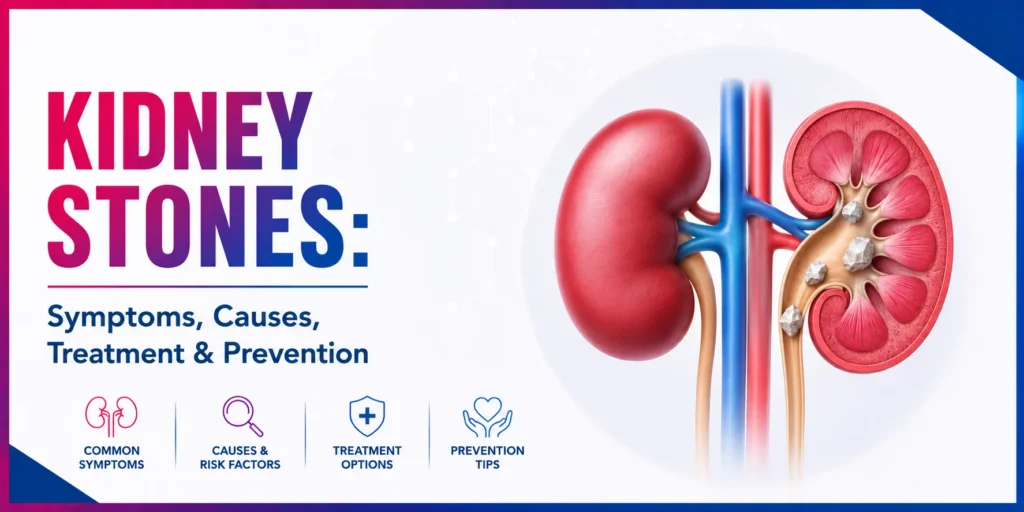
Table of Contents If you’ve ever had a kidney stone, you probably remember the exact moment it hit. The pain comes out of nowhere, and it doesn’t feel like normal back pain, it feels like something is seriously wrong. And honestly, that instinct is right. Kidney stones can be intensely painful, even though most of the time they aren’t dangerous if treated properly. If you’re dealing with symptoms right now, or you’ve had stones before and want to avoid another round, this guide will walk you through everything in plain language what causes kidney stones, how to spot the symptoms early, how doctors diagnose them, what treatment actually looks like, and how to stop them from coming back. What Exactly Is a Kidney Stone? Think of a kidney stone as a tiny, hard clump that forms when minerals and salts in your urine stick together instead of flushing out normally. Sometimes it’s as small as a grain of sand and you won’t even notice it pass. Other times it grows bigger even up to the size of a golf ball in rare cases and that’s when things get painful. Kidney stones are actually pretty common. A lot of people get at least one in their lifetime, and if you’ve had one before, there’s a good chance you could get another unless you make a few changes. The good news? Most cases are treatable, and your kidneys usually recover just fine. If you want to keep a closer eye on your kidney health in general, our nephrology team at Rungta Hospital can help, especially if stones keep coming back. How Do You Know If It’s a Kidney Stone? Some small stones don’t cause any symptoms at all, they just pass out quietly and you never know they were there. But once a stone starts moving toward the bladder, you’ll usually feel it. Here’s what to watch for: A sharp, stabbing pain in your back or side, usually just below the ribs Pain that spreads down toward your lower belly or groin Pain that comes and goes in waves, instead of staying constant A burning feeling when you pee Blood in your urine, it might look pink, red, or even a bit brown Urine that looks cloudy or smells unusually strong Feeling sick to your stomach or actually throwing up Needing to pee often, but only passing a little each time Fever or chills That last one, fever and chills, is important. If you have that along with the pain, it could mean there’s an infection too, and you shouldn’t wait it out at home. Get checked quickly. Also worth knowing: some kidney problems show symptoms that look a bit similar to stones at first. If your symptoms feel like they’re sticking around longer than usual, it’s worth reading up on the early signs of kidney failure too, just so you know what else to watch for. What Actually Causes Kidney Stones? There’s rarely just one cause, usually it’s a mix of habits and conditions that build up over time: Not drinking enough water. This is probably the biggest one. When you’re dehydrated, your urine becomes more concentrated, and that makes it way easier for minerals to clump together. Your diet. Eating a lot of salty food, too much animal protein, or foods high in oxalates (like spinach) can raise your risk. Being overweight or having diabetes. These conditions change how your body handles minerals, which can lead to stone formation. Family history. If your parents or siblings have had kidney stones, you’re more likely to get them too. Infections. Recurring kidney or urinary infections can actually trigger certain types of stones, so the two issues are often connected. Certain medications or supplements. Too much vitamin D, calcium-based antacids, or some diuretics can play a role. If you’ve had infections in the past along with stone trouble, it’s worth treating both issues together rather than separately, they tend to feed into each other. Different Types of Kidney Stones Not every stone is made of the same stuff, and knowing your type can really help with prevention later on: Type What Usually Causes It Calcium oxalate The most common type, usually linked to dehydration, diet, and low citrate in urine Uric acid Common in people who eat a lot of protein, or who have gout or diabetes Struvite Forms because of urinary infections, and can grow surprisingly fast Cystine A rarer type caused by a genetic condition that affects how the body handles certain amino acids Your doctor can usually figure out which type you have once a stone is passed or removed, and that’s what they’ll base your prevention plan on. How Do Doctors Diagnose Kidney Stones? If your doctor suspects a stone, they’ll usually start by asking about your symptoms and medical history, then run a few tests: A urine test to check for blood, infection, or stone-forming minerals A blood test to look at calcium and uric acid levels, and to see how well your kidneys are working overall Imaging — often starting with an ultrasound since it’s simple and doesn’t use radiation, but a CT scan gives the clearest picture of the stone’s exact size and location Our urology department at Rungta Hospital handles all of this in-house, so you don’t have to bounce between different places just to get a diagnosis. How Are Kidney Stones Treated? Treatment really depends on how big the stone is and where it’s sitting. If the stone is small: Drinking lots of water often helps it pass on its own Pain relief medication, taken carefully and as advised by your doctor Medication that relaxes the ureter muscles, making it easier for the stone to move down and out If the stone is bigger or stuck: Shock wave therapy (ESWL) — uses sound waves from outside the body to break the stone into smaller pieces that can pass naturally Ureteroscopy — a thin scope goes in through the urethra to find and remove