
10 Early Warning Signs of Coronary Artery Disease

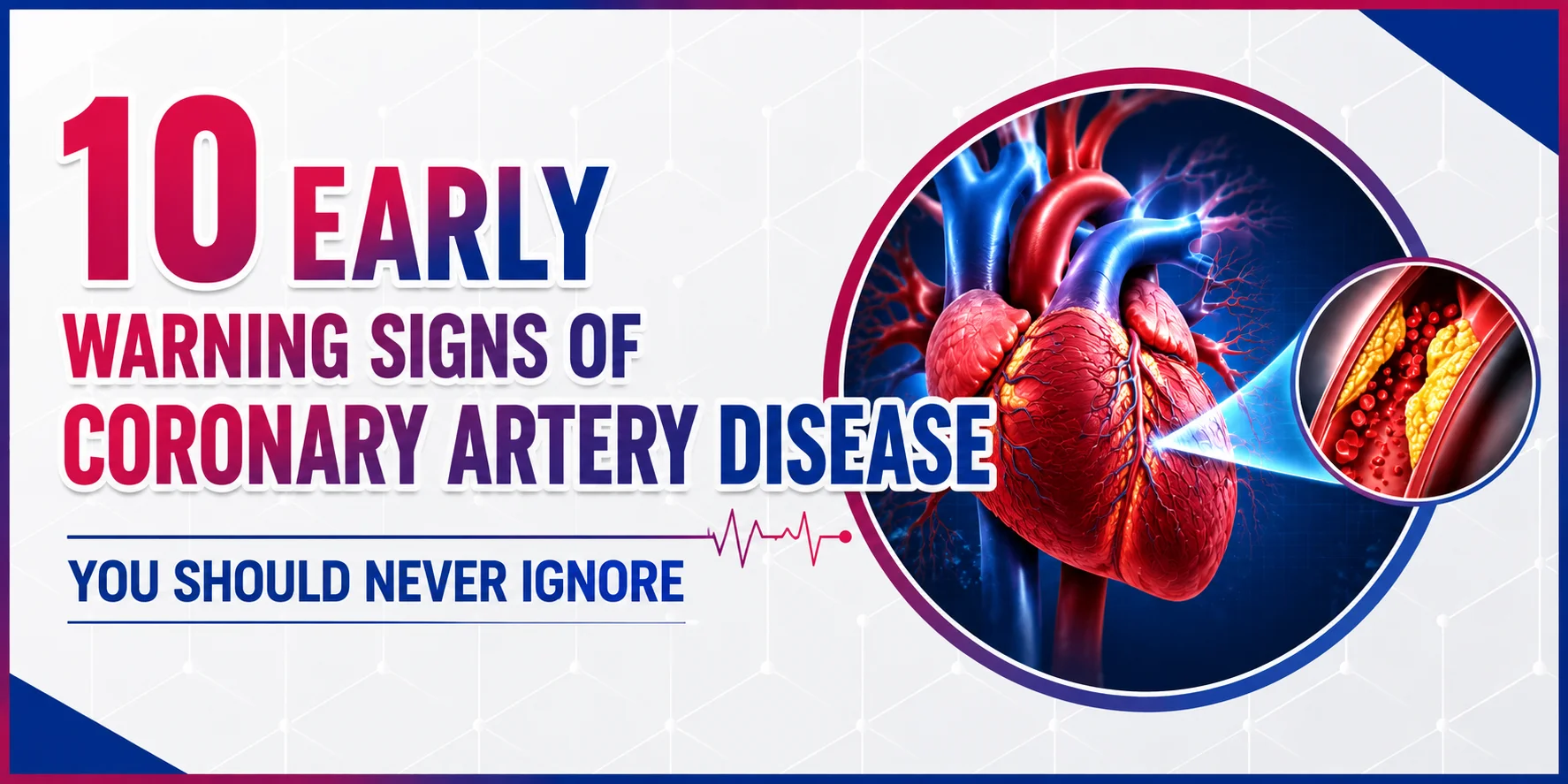
10 Early Warning Signs of Coronary Artery Disease You Should Never Ignore

Book An Appointment

Table of Contents

Your heart beats about 100,000 times a day, working tirelessly to pump blood to every corner of your body. But how often do we actually pay attention to it before something goes wrong?

For many, the first time they think about their heart health is during a medical emergency. However, conditions like Coronary Artery Disease (CAD) rarely happen overnight. Your body almost always sends out subtle distress signals long before a crisis occurs. Recognizing the early signs of coronary artery disease can literally save your life.

By understanding the common coronary artery disease symptoms, you can take control of your health and seek help when it matters most. Let’s break down what this condition is and the 10 warning symptoms of heart disease you should never ignore.

What is Coronary Artery Disease?

To understand CAD, think of your heart’s arteries as the plumbing pipes in a house. When the pipes are clean, water flows freely. But over time, things like cholesterol, fat, and calcium can build up on the inner walls of these arteries. This growth is called plaque.

As the plaque grows, it narrows the arteries, making it harder for oxygen-rich blood to reach your heart muscle. This narrowing causes heart blockage symptoms. If a blockage becomes severe or a piece of plaque ruptures, it can completely cut off blood flow, leading to a heart attack.

While a heart attack is a without warning event, CAD is a gradual process. It is also important to educate yourself on how different heart conditions manifest. For instance, many people confuse different cardiac events, but learning the basic differences between Heart Attack Vs Heart Failure can help you communicate much better with your doctor.

10 Early Warning Signs You Should Never Ignore

Because CAD develops slowly, the early symptoms can easily be mistaken for everyday fatigue, aging, or minor stress. Here are 10 warning signs that warrant a trip to the doctor:

1. Chest Discomfort or Angina

This is the classic hallmark of coronary artery disease symptoms. It doesn’t always feel like a sharp, stabbing pain. Instead, many people describe it as a heavy pressure, squeezing, tightness, or fullness in the center or left side of the chest. It often triggers during physical exertion or emotional stress and goes away with rest.

2. Shortness of Breath

If your heart isn’t getting enough blood to pump effectively, your lungs try to compensate. If you find yourself unusually winded, panting, or struggling for air after simple activities—like walking up a short flight of stairs or carrying groceries—it could indicate a heart blockage.

3. Unexplained Fatigue

We all get tired, but if you feel completely wiped out after a routine day, or if you wake up feeling exhausted despite sleeping well, your heart might be struggling. When arteries narrow, the heart has to work twice as hard to pump blood, leaving you feeling constantly drained.

4. Pain in the Jaw, Neck, Back, or Arms

Heart pain doesn’t always stay in the chest. Due to shared nerve pathways, the discomfort can “radiate” outward. You might feel a dull ache, tightness, or numbness in your left arm, shoulders, neck, back, or even your jaw.

5. Dizziness or Lightheadedness

Feeling faint or dizzy can happen for many reasons, like dehydration. However, if it happens frequently or is accompanied by a fluttering feeling in your chest, it could mean your narrowed arteries are failing to pump enough blood to your brain.

6. Nausea, Indigestion, or Stomach Pain

This is one of the most frequently missed symptoms of heart disease, especially in women. People often dismiss it as acid reflux, food poisoning, or a simple stomach bug. If you experience unusual stomach discomfort that doesn’t seem linked to what you ate, pay attention.

7. Heavy Sweating (Cold Sweats)

Breaking out in a cold sweat while sitting still or in a cool room is a major red flag. When your arteries are blocked, pumping blood requires a massive amount of extra effort from your heart. To keep its temperature down during this extra exertion, your body sweats.

8. Rapid or Irregular Heartbeat

A racing heart during a workout is normal. But if your heart feels like it is pounding, skipping a beat, or fluttering while you are resting, it means the electrical system of your heart might be reacting to a lack of oxygen and blood flow.

9. Swelling in the Legs, Ankles, or Feet

When the heart cannot pump blood efficiently, fluid can begin to back up in your veins. Over time, this fluid leaks into the surrounding tissues, causing noticeable swelling (edema) in your lower extremities.

10. Decreased Exercise Tolerance

If you used to enjoy a brisk 30-minute walk but suddenly find yourself needing to stop and rest after just 5 minutes, do not dismiss it as “just getting older.” A sudden drop in your physical stamina is a clear sign that your cardiovascular system is under stress.

The Changing Face of Heart Disease: It’s Not Just for the Elderly

There is a dangerous, outdated myth that heart issues only happen to older individuals or those with a long family history of illness.

Unfortunately, lifestyle shifts, high stress levels, poor dietary habits, and sedentary routines have drastically changed the demographics of cardiac patients. Doctors are noticing a worrying rise in cases of a heart attack in young adults who are in their 20s, 30s, and 40s.

No matter your age, ignoring the signs is never worth the risk. Everyone should familiarize themselves with the standard heart attack warning signs so they can act quickly if a medical emergency strikes themselves or a loved one.

Diagnosis and Coronary Artery Disease Treatment

If you notice any of the 10 symptoms listed above, the best thing you can do is to seek care from a cardiologist. They may be able to do some basic tests to check the heart’s function, such as taking an Electrocardiogram (ECG) or an echocardiogram, or performing a stress test.

If diagnosed, keep in mind that CAD is very manageable. Your doctor will outline a personalised coronary artery disease treatment plan, depending on the time of diagnosis, this will typically involve:

  • Lifestyle Adjustments: Making the decision to eat food that will support the heart, exercising regularly with low impact and quitting smoking.
  • Medications: Prescription drugs to lower cholesterol, control blood pressure, or thin the blood to prevent clots.
  • Surgical Procedures: If lifestyle and medication do not help, then other treatments, such as angioplasty (a balloon/stent is inserted into the blockage) or surgery, may be necessary. The best hospital for bypass surgery will give you the best surgical knowledge and complete post-surgical care.

Listen to Your Heart

The human body is a remarkable device at communicating to its owner that there is something amiss. If you start to notice your chest feels tight or you are tired, it may not seem like a big deal today, but early detection and treatment could save your heart from serious damage.

Do not allow something minor to escalate into a medical emergency. Make it a priority to keep your heart healthy and get a thorough checkup from the Best multispeciality hospital in jaipur to keep your heart pumping for years to come.
WhatsApp Call

Book an Appointment