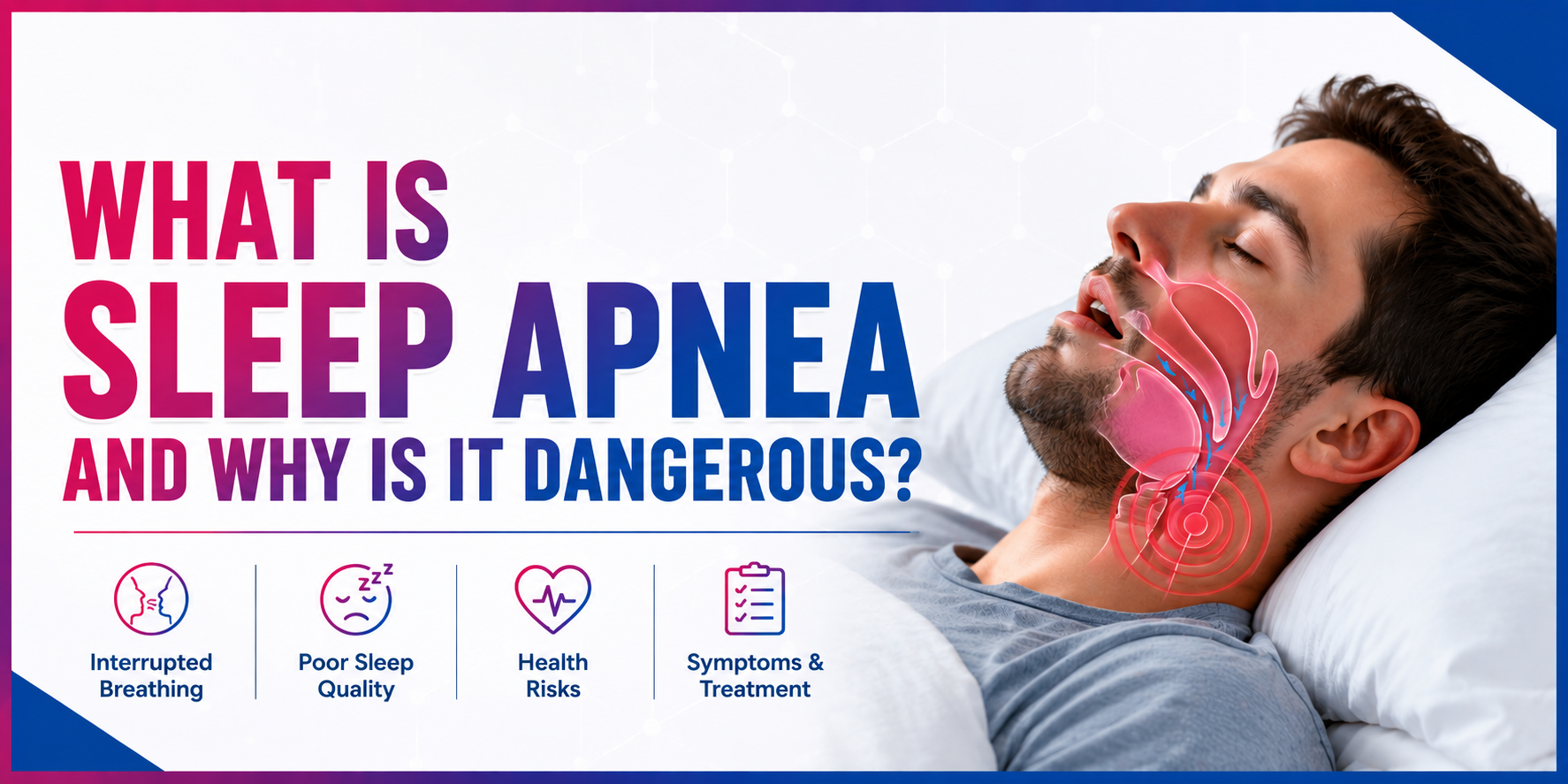

Have you ever woken up tired after 7-8 hours of sleep? Have there been any problems with loud snoring or pauses in breathing while sleeping that your family has complained about? Any of these might be a significant sleep apnea symptom that should not be overlooked.
Millions of people around the world, including many in India, experience sleep apnea. Unfortunately, many people think of its symptoms as the result of normal tiredness or stress. Untreated sleep apnea can impact your heart, brain, energy and quality of life.
This blog will cover what sleep apnea is, warning signs of sleep apnea, causes and risks of sleep apnea, treatment for sleep apnea, and in easy-to-understand language.
Sleep apnea is a sleep disorder in which breathing constantly stops and starts during sleep. They can happen many times during the night, taking oxygen away from the body and affecting the quality of sleep.
The most common type is called Obstructive Sleep Apnea (OSA) and it is when the muscles in the throat collapse too far and block the airway.
There are three main types of sleep apnea:
Many people are unaware that their breathing stops during sleep, especially if they sleep alone.
Recognizing sleep apnea symptoms early can help prevent serious health complications.
Here are some common warning signs:
Many people search online: “why am i tired after sleeping?”
The reason may be interrupted sleep caused by sleep apnea. Even if you sleep for many hours, your brain repeatedly wakes up briefly whenever breathing stops. This prevents deep, restful sleep and leads to constant fatigue during the day.
Several factors can increase the risk of sleep apnea.
Common causes include:
Not all snoring is dangerous, but loud snoring that is chronic can be symptoms of sleep apnea sometimes.
Blockage of airflow during sleep is one of the most common loud snoring causes. Snoring combined with choking sounds, daytime tiredness or pauses in breathing may be a sign of a more serious condition.
People often don’t recognize the health hazards of sleep apnea. Without treatment, however, sleep apnea can cause significant health issues in a person’s future.
Oxygen level drops repeatedly in the body when breathing stops during sleep. This places the stress on the vital organs, particularly the heart and brain.
The consequences of a prolonged period of avoiding sleep apnea symptoms can have a significant impact on health and quality of life.
You should seek medical advice if you experience:
Consulting an experienced pulmonologist in jaipur can help identify the underlying cause and prevent complications.
Early diagnosis often leads to better treatment outcomes.
Doctors usually diagnose sleep apnea through a detailed medical evaluation and sleep study.
Common diagnostic methods include:
A qualified best chest physician in jaipur can determine the severity of the condition and recommend suitable treatment options.
The good news is that effective sleep apnea treatment is available for most patients.
Treatment depends on the severity of the condition and underlying causes.
Lifestyle Changes
CPAP Therapy: One of the most effective treatments is a CPAP (Continuous Positive Airway Pressure) machine that keeps the airway open while sleeping.
Oral Appliances: For some patients, special dental appliances may be beneficial because they help to improve airflow.
Surgery: If the airway blockage is severe, surgery may be suggested.
Absolutely, there are many mild and moderate cases that can be helped through lifestyle modification, CPAP therapy and good medical care without surgery.
Here are some simple habits that may help improve sleep quality and breathing:
These lifestyle changes can support better respiratory health and reduce symptoms.
Sleep Apnea Is More Than Snoring. This is a serious medical condition which can lead to problems with the heart and brain, sleep and general health. It is very important to know the early sleep apnea symptoms such as loud snoring, fatigue during the day and broken breath.
Don’t ignore these symptoms if you or a family member have them. Early detection and diagnosis can significantly improve quality of life and lower future health risks.
Getting advice from the top critical care and pulmonary specialists can help you handle sleep apnea efficiently and ensure that your long term health isn’t endangered.