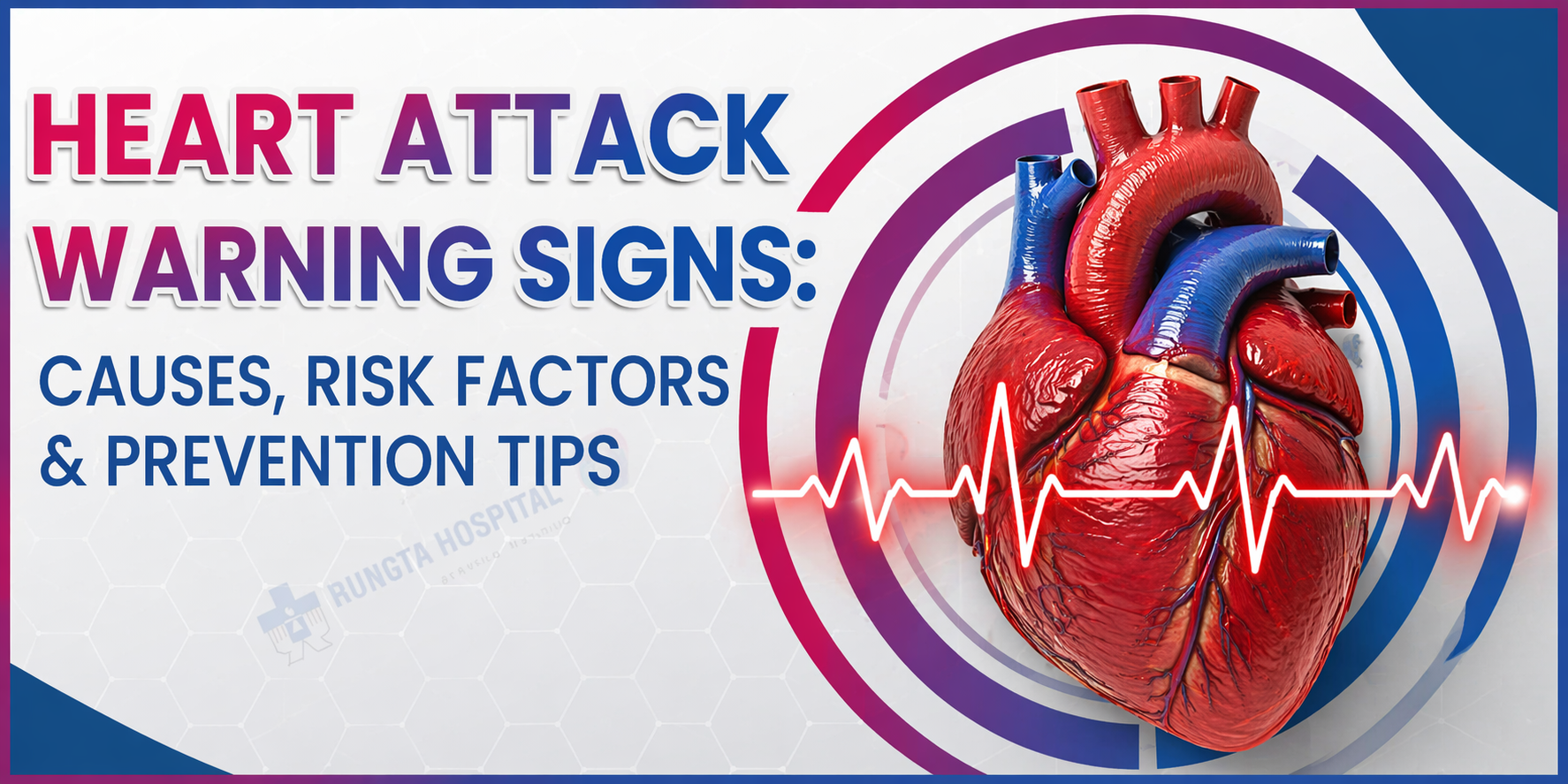
Feature Image for Heart attack warning signs and prevention

Heart Attack Warning Signs: Causes, Risk Factors & Prevention Tips

Book An Appointment

Table of Contents

A heart attack or myocardial infarction is a sudden stop in the supply of oxygen rich blood to a part of the heart muscle. Lack of oxygen causes the heart muscle to die. Heart disease has emerged as one of the major causes of death in India and the condition tends to strike at a very young age as compared to other western nations.

The diagnosis at an early age is not only a medical suggestion, it is a life-saving measure. Every minute matters when the heart muscle is starved of the blood. It is important to know the heart attack warning signs and to take prompt action that can save a full recovery and damage the heart that may never be recovered.

Common Heart Attack Warning Signs

Although most people would assume a heart attack involves a sudden collapse and is hollywood like, most heart attacks begin gradually and can lead to mild pain or discomfort.

  • Chest Pain or Discomfort: The majority of heart attacks include pain in the chest area, which takes more than several minutes. It may be an uncomfortable pressure, squeezing, fullness, or pain.
  • Shortness of Breath: This usually accompanies chest discomfort, but may also precede it. Even when you are resting you may find that you are unable to take a breath.
  • Pain in Upper Body: The pain may extend outside the chest to the arms (more often the left one), neck, jaw, or back.
  • Cold Sweats and Dizziness: Breaking out in a cold sweat for no apparent reason, or feeling lightheaded and dizzy, are common heart attack symptoms.
  • Nausea or Vomiting: Others experience that they are severely indigesting or that their stomach is heavy, thus resulting in vomiting.

Heart Attack Symptoms in Women

Heart attacks are more likely to affect women differently as compared to men. Although chest pain remains prevalent, women tend to have atypical symptoms which are often overlooked or diagnosed as something else.

  • Fatigue and Sleep Disturbances: A high number of women complain of feeling extraordinarily fatigued or experiencing insomnia during the weeks preceding a heart attack.
  • Indigestion-like Discomfort: Women tend to complain of the pain as pressure or aching, not sharp pain, sometimes it can feel like acid reflux or gas.
  • Why Symptoms Are Missed: Since such signs are less dramatic, women postpone their visit to the hospital believing that they have the flu or are simply stressed.

Early Warning Signs Before a Heart Attack

The body frequently sends signals days or even weeks prior to a big event happening. Early signs of heart attack can prevent medical attention.

  • Mild Chest Pressure: Chest pain that occurs several times but lasts a short time during physical activity and disappears with rest.
  • Unusual Tiredness: Sense of being exhausted after doing such simple chores as shopping at the grocery store or going up a flight of stairs.
  • Anxiety or Restlessness: A sense of impending doom or excessive nervousness but not in relation to a particular event in life.

When Should You See Medical Help?

If you or someone around you experiences severe chest pain, extreme shortness of breath, or fainting, call emergency services immediately.

What to do during a heart attack:

  • Call for help: Do not try to drive yourself to the hospital.
  • Chew an Aspirin: If recommended by an emergency operator, chewing an aspirin can help break down blood clots.
  • Stay Calm: Sit down and try to breathe deeply while waiting for the ambulance.

Causes of Heart Attack

The primary cause of a heart attack is Coronary Artery Disease (CAD).

  • Blocked Coronary Arteries: The arteries that supply the heart with blood become narrow due to plaque buildup (fat, cholesterol, and other substances).
  • Blood Clots: If a piece of plaque ruptures, a blood clot forms around it. This clot can completely block the blood flow, triggering the heart attack.

Risk Factors You Should Know

In India, lifestyle factors play a huge role in heart health. Major risk factors include:

  • High Blood Pressure: Puts extra strain on the heart and arteries.
  • Diabetes: High blood sugar can damage blood vessels over time.
  • Smoking: One of the most significant and preventable causes of heart disease.
  • Obesity: Carrying extra weight, especially around the belly, increases the heart’s workload.
  • Family History: If your close relatives had heart attacks at a young age, your risk is higher.

How to Prevent Heart Attack

Prevention is always better than cure. Small changes can lead to a much stronger heart:

  • Healthy Diet: Focus on fiber-rich grains, green leafy vegetables, and lean proteins. Reduce salt and sugar intake.
  • Regular Exercise: Aim for at least 30 minutes of brisk walking five days a week.
  • Stress Management: Yoga and meditation are excellent ways to lower cortisol levels and protect your heart.
  • Regular Health Checkups: Monitor your cholesterol and blood pressure levels yearly.

Diagnosis & Tests

When you arrive at a hospital with heart symptoms, doctors use several tools:

  • ECG (Electrocardiogram): Records the electrical activity of your heart to see if it’s damaged.
  • Blood Tests: To check for specific proteins (like Troponin) that the heart releases when injured.
  • Angiography: A specialized X-ray to see exactly where the blockages are located in your arteries.

Treatment Options in India

India provides high quality cardiac services. Treatments may involve:

  • Medications: Statins and blood thinners to control cholesterol.
  • Angioplasty: A procedure in which a blocked artery is opened with a small balloon, and a stent (a tube) is usually placed to keep it open.
  • Bypass Surgery: Removing a healthy blood vessel in one part of the body and making this vessel serve as a new pathway in which the blood circulates around the blocked blood vessel.

In case you need some expert advice or require a special heart check-up, it is prudent to have the best cardiologist in Jaipur so that your heart is in the safest of hands.

Frequently Asked Questions (FAQs)

Can heart attack symptoms come and go? Yes. In some cases the symptoms may sometimes be intermittent and only take a few minutes before they vanish before reoccurring a few hours later. This is a common symptom of unstable angina, and is an emergency.

How long does a heart attack last? The period the blood is blocked is the “attack” itself. The symptoms can last for minutes to hours. Nevertheless, the heart muscle is permanently damaged unless the blood flow is restored in 90 minutes.

Can young people get heart attacks? Yes. With sedentary lifestyle, stress and unhealthy diets, people are experiencing increased heart attacks in their 20s and 30s in India.

Conclusion

The best way you can save yourself and your family is to understand the heart attack warning signs. Since you can notice the early signs of heart attack or lead a healthy lifestyle, each decision you make influences your heart health.

Pay attention to such slight manifestations as uncharacteristic fatigue or slight pressure. The sooner the better. Book a heart check today and have your heart pumping!

WhatsApp Call