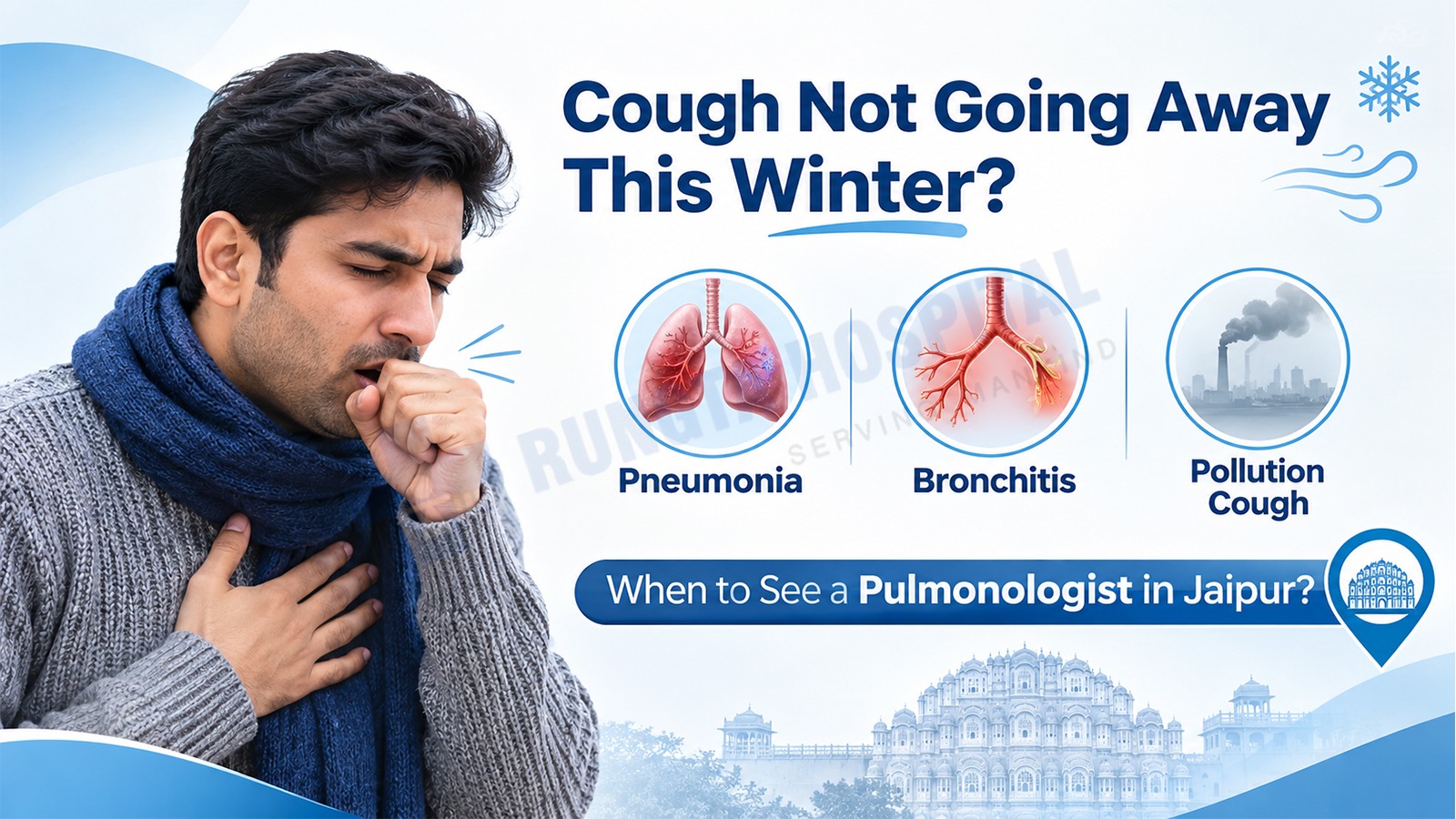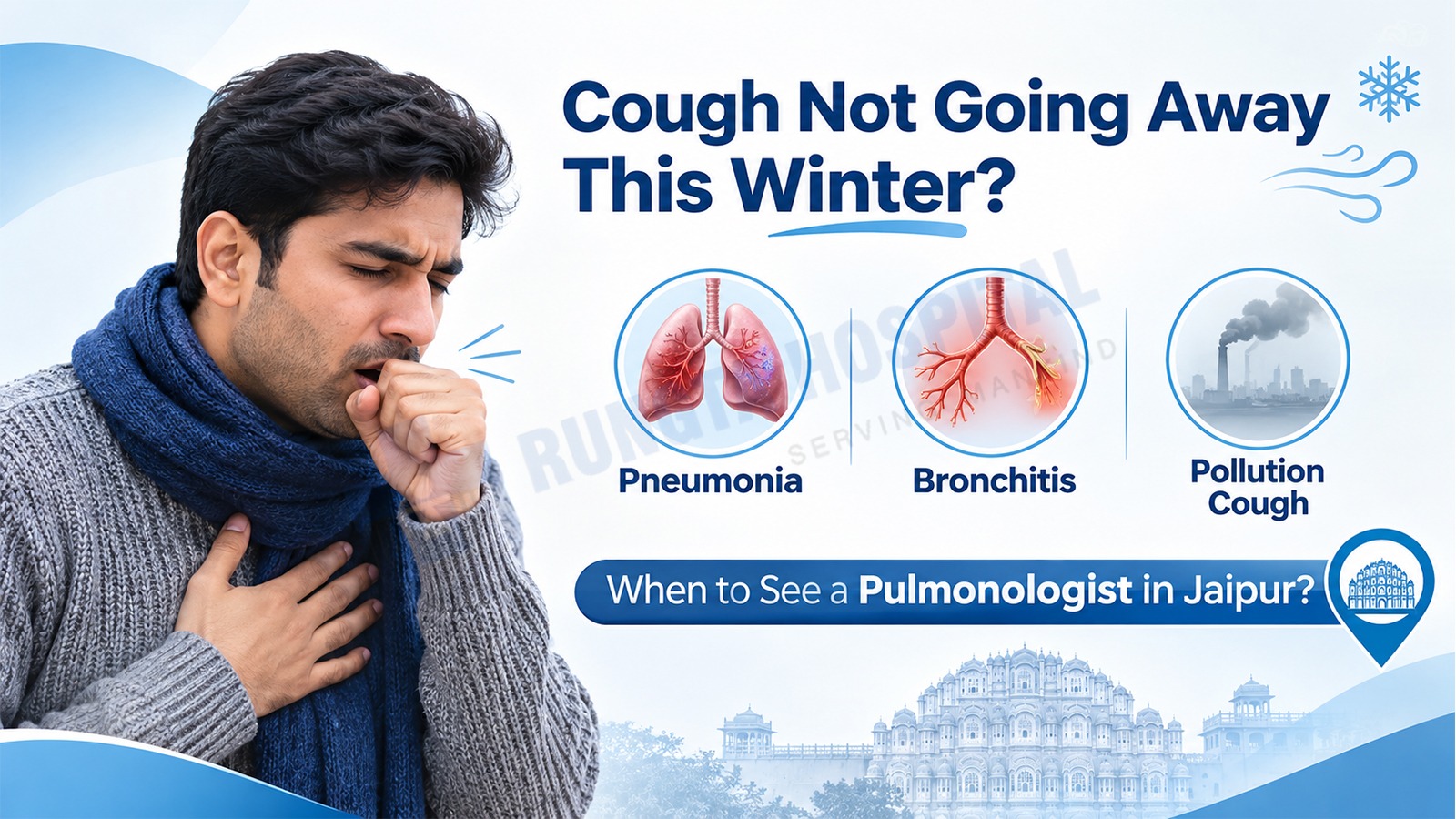

A cough resulting from a cold may seem innocuous at first, but when it persists for weeks or is accompanied by fever or breathlessness, it requires medical attention. In the city of Jaipur, winter infections and the irritation arising from dust, smoke and traffic pollution may lead to coughs with similar symptoms, but they may not necessarily require the same approach to treatment.
Cold air, respiratory infections, dust and smoke can irritate the airways. Triggers could come together and many cough spells could linger post-infection.
1. Pneumonia is the infection that occurs in the lungs
When the air sacs in the lungs get inflamed by pneumonia, they may get filled with pus and fluid. Pneumonia can be caused by either bacteria or viruses.
Symptoms include chills, fever, cough, and breathing difficulties along with tiredness. Elder adults also may experience confusion.
In certain cases, a medical professionals may look at the oxygen levels and suggest a chest X-ray. Antibiotics can be prescribed for bacterial pneumonia.
2. Bronchitis or the inflammation of organs for breathing
3. Pollution cough: irritation caused by pollution
Air pollutants such as fumes, dirt and smoke can lead to dry cough, irritation in the throat, wheezing, and tightness in the chest; further symptoms that become worse in open spaces or when air quality is poor.
Pollution itself does not usually lead to fever on its own, but can worsen asthma, chronic lung disease or some other illnesses.
Visit the doctor if your cough persists for longer than three weeks, recurs regularly, disrupts your sleep or occurs with wheezing, fever, pain in the chest and reduced capacity for workouts. If you are suffering from asthma or chronic obstructive pulmonary disease (COPD), weakened immune system or other chronic diseases associated with heart and lungs, consult your doctor as soon as possible instead of waiting for a scheduled appointment.
Serious symptoms that can be dangerous include severe shortness of breath, bluish or gray lips, confusion and fainting because of coughing up blood or chest pain.
The doctor may check the duration of cough, mucus in the lungs, cause of cough, presence of fever, allergies, smoking habits and lung history. The doctor may examine the chest and perform the test for oxygen saturation.
Various diagnostic methods may include X-ray of the lungs, blood tests and tests of lung functions; not everyone should go through all of them.
Following these recommendations can help to minimize exposure, but they cannot replace medical attention needed when symptoms arise.
You can read also:- What Happens in the ICU? A Guide for Patients’ Families
A winter cough could be due to infections, pollution or underlying lung diseases. It is necessary to diagnose its cause rather than keep treating it. Consult a chest physician if the cough persists or breathing changes.
Rungta Hospital in Malviya Nagar, Jaipur, has a list of respiratory specialists and diagnostic facilities. Call up the hospital to check consultation timings and availability.
1. How long should the patient wait before visiting a doctor with a cough during the winter season?
Ans. The cough may remain persistent after a viral infection for weeks. One should see a doctor if the cough does not seem to improve after three weeks, worsens, and even affects the patient’s sleep. In the event of high temperature, difficulty with breathing, chest pain, or blood in the sputum, a medical professional should be consulted immediately.
2. Which symptoms can differentiate pneumonia from bronchitis?
Ans. Symptoms are insufficient to provide the correct diagnosis. Pneumonia typically results in fever and chest pain along with difficulty breathing, while bronchitis develops as a type of cough following a viral illness. Doctors do a physical examination of the patient and chest x-ray to provide the right diagnosis.
3. Is it possible for air pollution to trigger dry coughing without fever?
Ans. Yes, the air pollutants like dust, smoke and fine particles can irritate the upper respiratory tract causing a dry cough, irritation of the throat, wheezing and tightness of the chest without the presence of fever. However, just because the patient does not have a fever, it does not mean infection can be ruled out.
4. Do I require antibiotics when suffering from bronchitis or pneumonia?
Ans. Most forms of acute bronchitis are caused by a virus and do not require antibiotics to treat. But, bacterial pneumonia usually requires antibiotics, while viral pneumonia requires treatment of a different nature. A doctor can only determine this based on their evaluation of an individual’s condition.
Seek immediate medical attention in case you are facing severe difficulty in breathing, your lips are bluish or greyish in color, your mind is confused, you feel faint, or you have chest pain or are coughing blood. If you are a child corresponding signs of difficulty in breathing such as ribs being sucked inward, bluish lips, unusually drowsy behavior also require urgent medical concern.