Heart conditions have become quite common due to rising stress and other factors. Angioplasty and bypass surgery are quite common procedures performed to support heart health. But which one is suitable: angioplasty vs. bypass surgery?
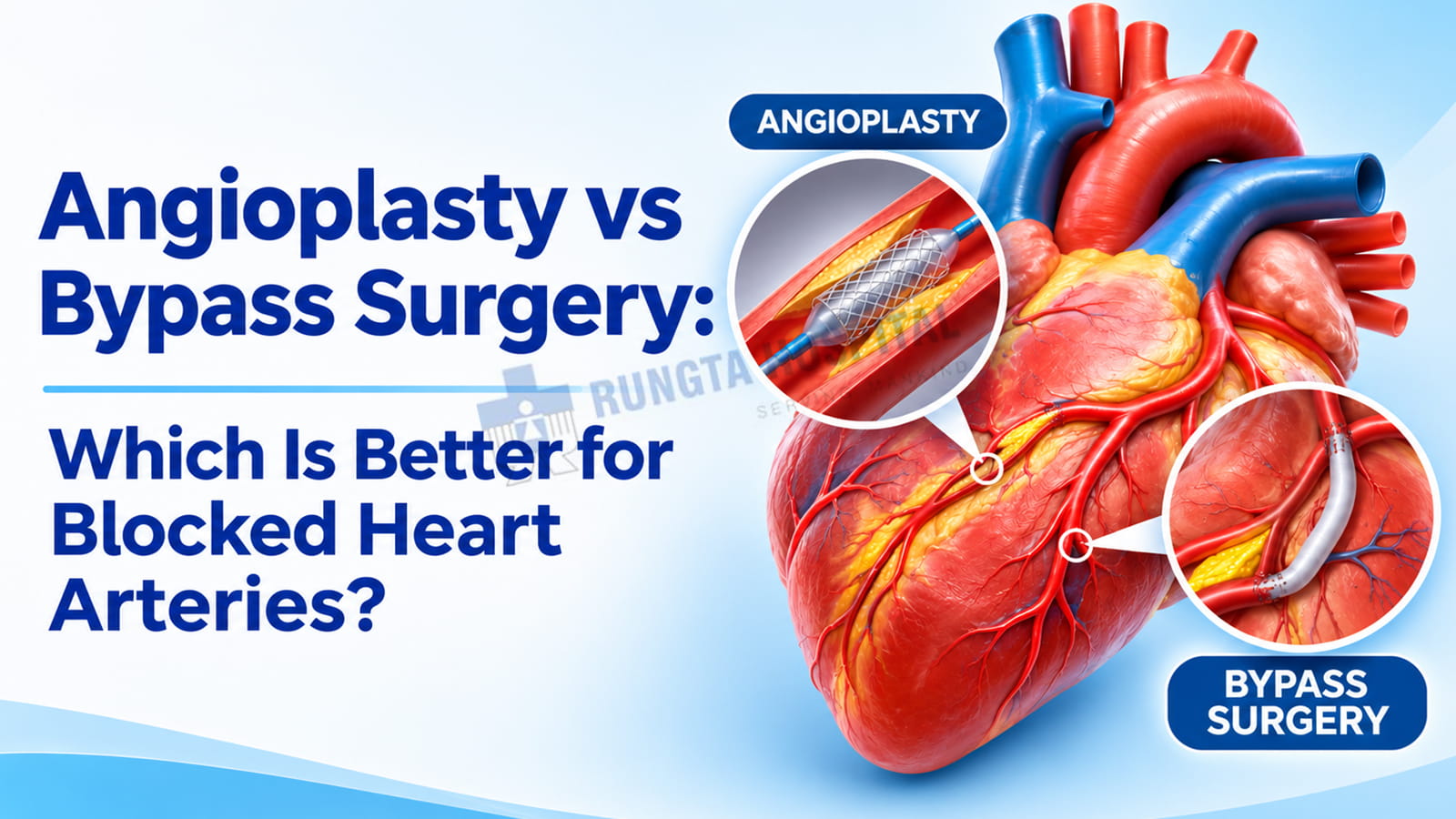
Angioplasty is a procedure in which a blocked heart artery is opened with the help of a balloon and a stent that is inserted through the groin or wrist. In Bypass surgery (CABG), a new route around the blockage is created by using blood vessels from anywhere in the body.
Angioplasty is suitable for simple and few blockages bypass on the other hand is ideal for complex or multiple blockages. Wondering which one is suitable for your heart condition? Well, let’s learn about both in detail here:
Angioplasty or bypass: which is better? Let’s get an idea of both surgical procedures with the help of a table:
Difference | Angioplasty | Bypass Surgery |
Procedure | Opens blocked arteries using a balloon and stent | Creates a new route around blocked arteries |
Anaesthesia | Usually local | General |
Approach | Minimally invasive | Open-heart surgery |
Hospital stay | Usually 1–2 days | Around 5–7 days |
Recovery | About 1 week | Around 6–12 weeks |
Best for | Selected simpler blockages | Multiple or complex blockages |
Angioplasty is a heart blockage treatment that is minimally invasive. It is also known as percutaneous coronary intervention (PCI). The procedure is quite helpful in opening blocked or narrowed heart arteries.
CABG vs PCI- which one is best? If you’re wondering, it is best to know about Coronary artery bypass grafting (CABG) as well. It is popularly known as a bypass surgery. In this procedure, a new route for blood is created that flows around the blocked heart arteries.
The procedure involves the cardiologist using a healthy blood vessel from any part of the patient’s body, such as the leg, arm, or chest and connecting it to the heart artery in order to bypass the blocked section. It is usually performed using these techniques:
The suitable technique depends upon the total assessment done by the surgeon and the patient’s overall condition.
Which one is better between stent vs bypass? Well, it depends on several factors, some of which include:
Number of Blockages:
If a person is suffering from multiple blocked arteries, then in comparison to angioplasty, bypass surgery is indeed a viable option.
Location of Blockages:
For some conditions that include the left main coronary artery or complex blockages, bypass surgery is far better than angioplasty.
Diabetes:
Patients who suffer from diabetes along with multiple-vessel coronary artery disease are often recommended to get bypass surgery in comparison to angioplasty.
Heart Pumping Function:
If heart function is reduced, it can also influence the procedure that is ideal for you.
· Overall Health:
Several other factors such as medical conditions, age and poor health can also be a major deciding factor for the treatment option.
To know which procedure is right for your heart condition, get in contact with an expert cardiologist for a thorough assessment.
Is angioplasty recovery time less than bypass surgery? Well, the overall recovery time between both procedures is quite different.
The recovery duration of both procedures depends on several factors, so make sure to follow your doctor’s guidelines, take proper wound care, take medicines, and attend follow-up appointments for a shorter recovery duration.
You can read also:- Life After Heart Bypass Surgery: Recovery Timeline and Precautions
Now that you know about angioplasty vs bypass surgery, you may be wondering about the risks and outcomes related to both procedures. Both procedures are known for improving blood flow to the heart, but the risk factors in each procedure are quite different.
Kindly note that blockages can develop even after getting either procedure. It is advised to take the prescribed medicines timely, focus on controlling blood sugar, blood pressure, and cholesterol.
Apart from that, make sure to have an active lifestyle and avoid alcohol and smoking to reduce the chances of cardiovascular risks further.
How many blockages need bypass? What are the tests that a doctor recommends to find the ideal procedure? If that’s what you’re wondering, then there are several tests that may be recommended by your doctor to you, depending on the severity of your heart condition, heart function, and the location of coronary artery blockages.
Some of the most common tests include:
The outcome or result of these tests helps in determining the right approach and treatment for your condition.
Still not sure which one is the right treatment approach between angioplasty vs bypass surgery? If you are experiencing any kind of discomfort in your chest, breathlessness and other symptoms, it is best to get in touch with your cardiologist as soon as possible for a detailed evaluation.
Issues such as sudden chest pain, if left unchecked, can lead to stroke. Rungta Hospital has a team of highly experienced and board-certified cardiologists who have years of expertise in offering critical and result-oriented medical care.
In order to provide you with affordable and effective treatment, we have empanelled our hospital with major government initiatives to provide you with cashless treatment options.
Reach out to us and get all the information regarding cashless treatment schemes and eligibility for your treatment.
1. Which is better, angioplasty or bypass surgery?
When it comes to answering the question, angioplasty or bypass, which is better, it depends on one’s condition. Angioplasty is ideal for patients with one or two simple blockages, while bypass surgery is better for those who are suffering from multiple and complex heart blockages. Get in touch with your cardiologist and share all the details regarding your condition to find out the ideal treatment.
2. How many blockages need bypass surgery?
If you’re wondering how many blockages need bypass, then there is no single number that indicates bypass surgery. The cardiologist usually finds out how many arteries are blocked, where the blockages are, how calcified they are, the condition of the heart and how well it pumps. If your condition has spread through all three main arteries or into the left main artery, then your cardiologist may suggest bypass. However, each case differs from another, so it is best to learn about it in detail from your cardiologist.
3. What is the recovery time after angioplasty vs bypass?
Angioplasty recovery time is shorter, with only one or two days in the hospital. Patients can return to light activities after a week. The duration of bypass surgery is longer, with hospital stays of about a week, and full recovery is around 6 to 12 weeks, depending on your overall health and age.
4. Can blockages come back after angioplasty or bypass?
Yes, new blockages can form in other arteries or bypass grafts, and stents can narrow again after either type of surgery. It is ideal to follow all the guidelines provided by the cardiologist, such as taking prescribed medicines, controlling sugar, blood pressure and cholesterol, while adopting an active lifestyle to reduce risk further.
5. Is angioplasty a surgery?
Angioplasty is a minimally invasive procedure, not open surgery. A thin tube is passed through an artery in the wrist or groin to the heart, usually under local anaesthesia while the patient is awake. Bypass surgery, by contrast, is open-heart surgery done under general anaesthesia.